
“The Matrix”(1999 science fiction film) Was Released 25 Years Ago Today

Neo: “What truth?”
Morpheus: “That you are a slave, Neo. Like everyone else, you were born into bondage, born into a prison that you can not smell or taste or touch. A prison… for your mind. Unfortunately, no one can be… told what the Matrix is. You have to see it for yourself. This is your last chance. After this, there is no turning back. You take the blue pill…The story ends…You wake up in your bed and believe whatever you want to believe. You take the red pill, you stay in Wonderland. And I show you how deep the rabbit hole goes. Remember… All I am offering is the truth, nothing more.”
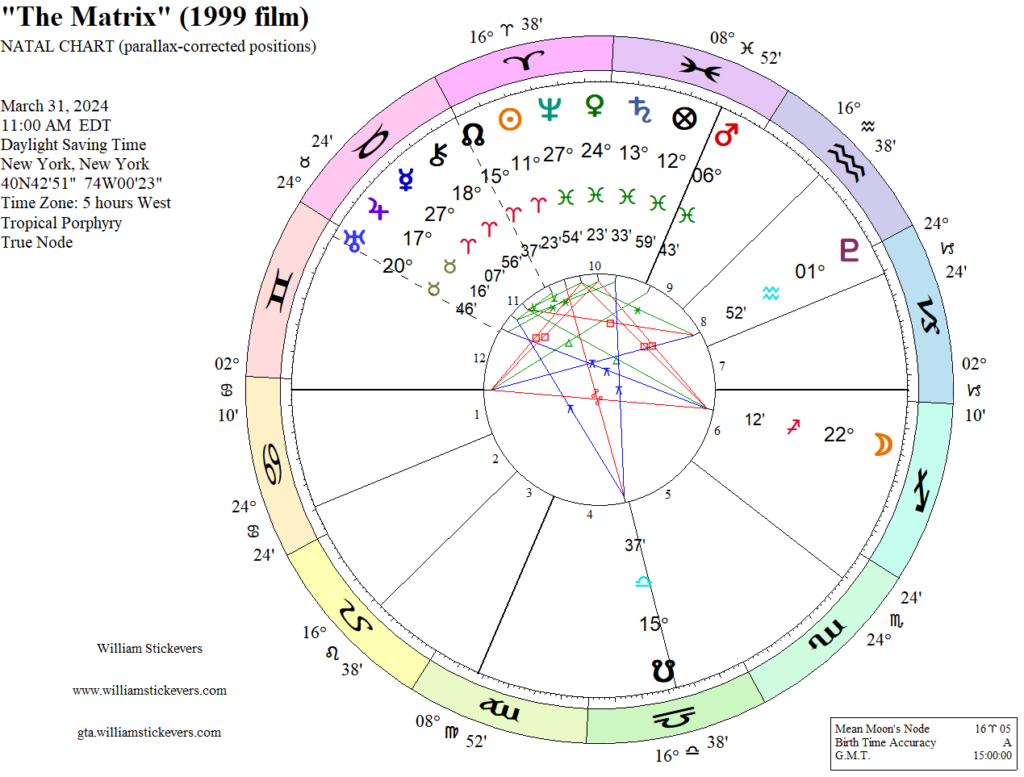
The Matrix, released on March 31, 1999, is a groundbreaking science fiction film that has left an indelible mark on the genre and the film industry as a whole. Directed by the Wachowski siblings, the movie follows the story of Thomas Anderson, aka Neo, as he discovers the true nature of his reality and his role in the fight against the machines that have enslaved humanity. As we celebrate the 25th anniversary of this iconic film, it’s worth delving into the fascinating behind-the-scenes story that reveals the challenges, inspirations, and hidden meanings that shaped this cinematic masterpiece, particularly the casting process that brought together a talented ensemble.
The journey of bringing The Matrix to the big screen was not an easy one for the Wachowskis, especially when it came to casting the lead roles. Despite having a clear vision for the film, they faced numerous obstacles, including budget constraints and studio pressure to cast big-name actors. The Wachowskis insisted on directing the film themselves, but their lack of experience made it difficult to secure funding. They managed to prove their mettle with the critically acclaimed film Bound, which impressed Warner Bros enough to greenlight The Matrix. However, the studio was unwilling to meet the Wachowskis’ initial budget request of $180 million, forcing them to settle for a more modest $60 million and move the production to Australia.
The studio pushed for well-known actors, but many, including Nicolas Cage, Leonardo DiCaprio, and Brad Pitt, turned down the role of Neo. Even Will Smith, who was offered the part, famously declined, later admitting, “I’m not proud of it.” The studio also considered changing Neo’s character to a woman to accommodate actresses like Sandra Bullock, who ultimately passed on the role. Keanu Reeves, who had recently undergone back surgery, was eventually cast as Neo. Despite his physical limitations during fight scenes, Reeves delivered an iconic performance and demonstrated his dedication by donating a significant portion of his earnings to leukemia research.
The role of Trinity, Neo’s love interest and fellow rebel, was also highly sought after. Many actresses, including Janet Jackson, Salma Hayek, and Angelina Jolie, turned down the part. Jada Pinkett Smith auditioned and screen-tested with Keanu Reeves but was later cast as Niobe in the sequel, The Matrix Reloaded. Ultimately, Carrie-Anne Moss won the role after a grueling three-hour physical audition. Moss’s commitment to the character was evident when she chose to continue filming despite twisting her ankle, fearing that the Wachowskis might recast her if they knew about her injury. Maitland McDonagh praised Moss as “a major find” in her review for TV Guide.
Laurence Fishburne’s portrayal of Morpheus, Neo’s mentor, was another casting triumph. The Wachowskis initially considered actors like Russell Crowe, Chow Yun Fat, and Sean Connery for the role, but they either turned it down or failed to connect with the script. Fishburne, on the other hand, embraced the character and followed the Wachowskis’ guidance to base his performance on the Morpheus character from Neil Gaiman’s comic book series, The Sandman.
The antagonist, Agent Smith, was a crucial role that required an actor who could convey both a menacing presence and a sense of otherworldliness. The Wachowskis initially wanted Jean Reno for the part, but he turned it down to appear in Godzilla. Hugo Weaving, whom the Wachowskis had seen in the Australian film Proof, was ultimately cast. Weaving’s unique approach to the character, influenced by the Wachowskis’ own deep voices and his desire to avoid sounding either too human or too robotic, created a memorable villain that has become a cultural icon.
The supporting cast, including Joe Pantoliano as Cypher, Marcus Chong as Tank, and Julian Arahanga as Apoc, among others, were carefully chosen to bring depth and authenticity to their roles. Each actor brought their own unique style and perspective to their characters, contributing to the film’s overall success.
The Wachowskis drew inspiration from a wide range of sources while crafting the world of The Matrix. Comic books like The Invisibles by Grant Morrison and the novel Neuromancer by William Gibson heavily influenced the film’s themes and aesthetics. The Japanese anime Ghost in the Shell, which features a digital network connecting the world and a hero with superpowers hunting a hacker, also served as a significant inspiration, with some shots from The Matrix directly referencing the anime. Philosophical works, such as Jean Baudrillard’s Simulacra and Simulation and Plato’s Allegory of the Cave, also played a crucial role in shaping the film’s narrative and themes.
One of the most intriguing aspects of The Matrix is the transgender subtext woven throughout the film. The Wachowskis, who later came out as transgender women, have confirmed that the film was an allegory for the desire for transformation and the experience of being closeted. The character of Switch, portrayed by Belinda McClory, was originally intended to be a man in the real world and a woman in the Matrix, highlighting the theme of identity and transformation. The red pill, which Neo takes to uncover the truth, also serves as a metaphor for estrogen, a hormone used in gender transition.
The Matrix’s stunning visuals and groundbreaking action sequences can be attributed to the meticulous work of the film’s creative team. Choreographer Woo-Ping Yuen, initially reluctant to take on the project, demanded total control over the fight scenes and insisted on a four-month training period for the actors. This dedication to the craft resulted in some of the most memorable action sequences in cinema history. The film’s distinct look was achieved through the use of color tints, with green representing the Matrix, blue for the real world, and yellow for the training construct. The iconic green code, designed by Simon Whitely, was based on rain running down a window pane and featured Japanese katakana characters from a cookbook.
The Matrix is deeply rooted in various philosophical concepts, which the Wachowskis skillfully wove into the film’s narrative. The influence of French philosopher Jean Baudrillard’s work Simulacra and Simulation is evident in the film, with a copy of the book visible on-screen as “the book used to conceal disks.” Morpheus also quotes the phrase “desert of the real” from the book, which was required reading for the actors prior to filming. However, Baudrillard himself claimed that The Matrix misunderstands and distorts his work.
Another significant influence on the film is Bracha L. Ettinger’s philosophical-psychoanalytical idea of the Matrixial Gaze. This concept, which focuses on the archaic matrixial space that resists the field of simulacra, was brought to public attention through the writings of art historians and film theorists.
The premise of The Matrix, a generated reality created by malicious machines, can be seen as an allusion to Descartes’ “First Meditation” and the idea of an evil demon that creates a comprehensive illusion to deceive us. This concept also relates to Hilary Putnam’s brain in a vat scenario. Additionally, the film has been compared to Plato’s Allegory of the Cave, which suggests that most people perceive only the shadow of an object and are thus limited to false perception.
Immanuel Kant’s philosophy has also been cited as an influence on the film, particularly in how individuals within the Matrix interact with one another and with the system. Kant’s idea that people come to know and explore the world through synthetic means, making it difficult to discern truth from falsely perceived views, is reflected in the film’s depiction of the first version of the Matrix, designed as a human utopia. The failure of this utopia, as explained by Agent Smith, can be seen as a Kantian notion, as humans were not easily made content with a perfect world imposed upon them.
The Matrix was praised by many critics, filmmakers, and science fiction authors for its spectacular action scenes, groundbreaking special effects, and thought-provoking themes. On review aggregator Rotten Tomatoes, the film holds an approval rating of 83% based on 207 reviews, with an average score of 7.7/10. The site’s critical consensus reads, “Thanks to the Wachowskis’ imaginative vision, The Matrix is a smartly crafted combination of spectacular action and groundbreaking special effects”. Roger Ebert gave the film three stars out of four, praising its visuals and premise, while Entertainment Weekly called The Matrix “the most influential action movie of the generation.”
Filmmakers and science fiction creators alike generally took a complimentary perspective of The Matrix. William Gibson, a key figure in cyberpunk fiction, called the film “an innocent delight I hadn’t felt in a long time” and stated, “Neo is my favorite-ever science fiction hero, absolutely.” Joss Whedon called the film “my number one” and praised its storytelling, structure, and depth. Quentin Tarantino counted The Matrix as one of his twenty favorite movies from 1992 to 2009, and James Cameron called it “one of the most profoundly fresh science fiction films ever made.”
As we celebrate the 25th anniversary of The Matrix, it’s worth noting how the film’s themes and ideas have taken on new relevance in light of the current AI revolution, particularly with the launch of advanced language models like ChatGPT-4. The Matrix depicts a world where humans are unknowingly trapped in a simulated reality created by machines, a concept that resonates with the growing concerns about the potential implications of artificial intelligence on our society.
The rapid advancements in AI technology, exemplified by the impressive capabilities of ChatGPT-4 and other cutting-edge models, have sparked both excitement and apprehension. On the one hand, these AI systems have the potential to revolutionize various fields, from healthcare and education to business and creative industries, by providing intelligent assistance and generating human-like responses. However, there are also valid concerns about the ethical implications of AI, such as job displacement, privacy issues, and the possibility of AI systems being used for malicious purposes. The Matrix serves as a cautionary tale, prompting us to consider the consequences of relying too heavily on technology and the importance of maintaining our agency and critical thinking skills in the face of increasingly sophisticated AI.
Moreover, the film’s iconic “red pill” moment, where Neo chooses to embrace the truth of his reality, can be seen as a metaphor for the need to question the information and narratives presented to us, especially in an era where AI-generated content is becoming more prevalent. As we navigate this new landscape shaped by the AI revolution, it’s crucial to approach these technologies with a mix of openness and informed skepticism, ensuring that we harness their potential while also being mindful of the potential risks.
As we reflect on the 25th anniversary of The Matrix, it’s clear that the film’s impact extends far beyond its groundbreaking special effects, mind-bending plot, and thought-provoking themes but also in its ability to provoke discussions about the nature of reality, free will, and the role of technology in our lives – discussions that are more relevant than ever as we stand on the brink of a new era defined by artificial intelligence The Wachowskis’ vision, perseverance, and willingness to infuse the story with deeply personal themes have created a cinematic experience that continues to captivate and inspire audiences. The behind-the-scenes story of The Matrix, particularly the casting process, is a testament to the power of creativity, determination, and the transformative potential of art. By questioning our reality and challenging us to think beyond the boundaries of our perceived world, The Matrix has secured its place as a timeless classic that will continue to be celebrated for generations to come.
Responses