
Convergence of Consciousness: Stanislav Grof’s Transpersonal Perspective on the Mayan Calendar Prophecy

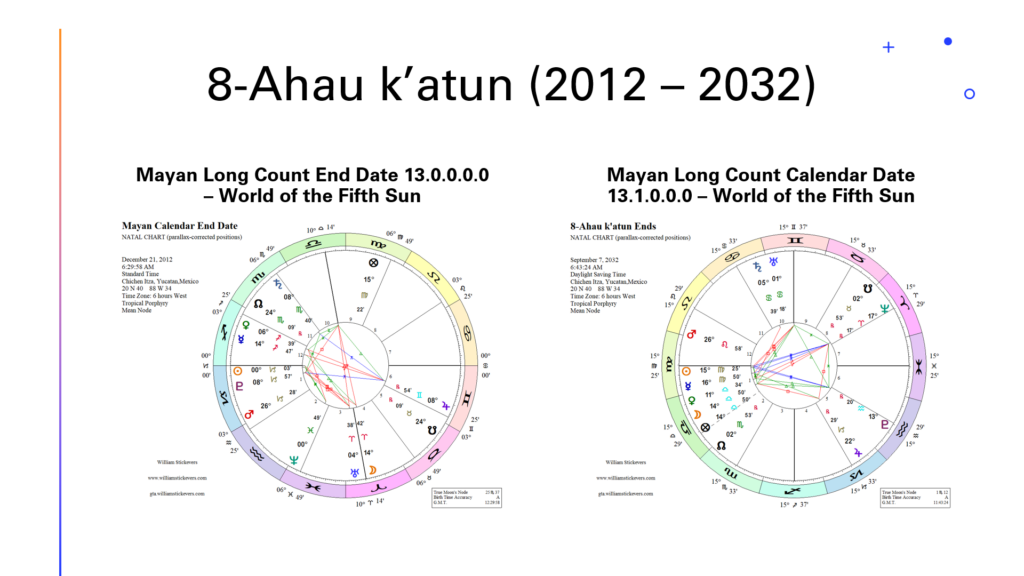
The Mayan calendar, with its intricate Long Count cycle concluding on December 21, 2012, has long intrigued scholars and laypeople alike. This date signified a rare astronomical alignment of the winter solstice sun with the Galactic Center of the Milky Way. This synchronicity occurs only once every approximately 26,000 years due to the precession of Earth’s axis. This slow wobble in Earth’s rotation alters our perspective of the heavens and brings about a realignment with celestial bodies on a grand temporal scale.
In the eyes of the Maya, this celestial conjunction was imbued with great spiritual significance, heralding a cosmic convergence of masculine and feminine divine energies. This interpretation finds echoes across diverse ancient traditions that often ascribe to astronomical events profound metaphysical import, depicting them as powerful symbols for inner, transformative processes. The 2012 event was thus not a harbinger of physical end times but signified an epochal shift in human consciousness, an invitation to a collective psychological metamorphosis—a shedding of old paradigms and a rebirth into new ways of thinking and being.
Stanislav Grof is a Czech psychiatrist and one of the founders of transpersonal psychology, which examines the spiritual aspects of the human mind and consciousness beyond the limits of ego and personality. Grof is known for his pioneering work in the study of non-ordinary states of consciousness, both through early work with LSD and other psychedelics (before their use was restricted) and later through the development of Holotropic Breathwork, a natural method to induce these states.
His psycho-spiritual reading of the Mayan calendar, specifically the 2012 prophecy, is relevant because Grof’s extensive study of altered states of consciousness provides a framework for understanding the Mayan prophecy beyond literal interpretations. Grof’s work often explores themes of death and rebirth, psychological transformation, and the healing potential of profound personal and collective crises.
From Grof’s perspective, major astrological events, like the Mayan calendar’s prophesized alignment, could be macrocosmic triggers for microcosmic psychological events in individuals and within the collective. In his view, such alignments could catalyze profound shifts in collective human consciousness, bringing to the surface unconscious material that needs to be addressed for growth and healing to create wholeness for humanity.
Stanislav Grof’s psycho-spiritual reading of this period, particularly against the backdrop of contemporary political climates in the United States, posits that such figures as Donal Trump and the societal dynamics they embody resonate with the deeper, archetypal patterns that the Mayan prophecies allude to. These patterns indicate a sweeping cycle of global transformation and existential challenge, as anticipated by the Long Count calendar.
Astrologically, the delineation of influence during the galactic alignment is demarcated into three distinct ‘orbs’:
- Exact Conjunction (1978-2047): A precise 69.4-year timeframe where the winter solstice sun is positioned within the 1.5-degree band directly aligned with the galactic center, denoting a period of acute cosmic influence and potential intensified human experience.
- Very Close Conjunction (1940-2085): Spanning 145 years, this era witnesses the gradual approach and recession of the solstice sun to the galactic rift, symbolizing an extended phase of transformational energies.
- Broad Conjunction (938-3086): Over a vast span of 2148 years, this encompasses the time when the solstice sun is within a 15-degree proximity to the galactic alignment, reflecting a prolonged period of evolutionary challenges and opportunities.
The historical synchronization of these orbs with monumental human events—the advent of nuclear capabilities, the global conflicts of the World Wars, the tension of the Cold War, and the cultural renaissance spurred by psychedelic exploration—suggests that our passage through these cycles is marked by both profound peril and the potential for significant societal and spiritual renewal.
According to new age writer José Argüelles, who played a central role that he played in the emergence of the 2012 phenomenon, and Ricardo Cajas, president of the Colectivo de Organizaciones Indígenas de Guatemala, the Mayan Calendar end date did not represent an end of humanity but that the new cycle “that supposes changes in human consciousness.” The Mayan 8-Ahau k’atun, as interpreted by Mayan Elders and spanning from 2012 to 2032 (7,200 days to be exact), is viewed as an era of intense transformation and upheaval. This period is punctuated by:
- Scarcity in Essential Resources: Heightened by the overextension of natural resources, this predicament is exacerbated by the converging pressures of population expansion, environmental damage, and the effects of climate change.
- Global Economic Distress: A repercussion of an increasingly interdependent world economy, vulnerable to systemic shocks and the ramifications of resource depletion and socio-political instability.
- Rise in Natural Disasters: Likely an outcome of environmental degradation and climate change, this trend reflects the Earth’s response to ecological imbalances and the need for a more harmonious relationship with nature.
- Collapse of Dominant Narratives: This suggests a critical examination and subsequent disintegration of long-held societal narratives and worldviews that no longer resonate with emerging truths.
- Questioning of Established Belief Systems: This encompasses a deep reevaluation of both spiritual doctrines and materialist-scientific paradigms, paving the way for a more integrative and holistic understanding of reality.
- Dismantling of the Old World Order: An implication of significant shifts in geopolitical, economic, and societal frameworks, potentially leading to the emergence of new forms of governance and community organization.
- Erosion of Confidence in Leadership: As current leadership models falter under the weight of global crises, there is a growing distrust in their capability to guide humanity toward a prosperous future.
- Birth of a New Paradigm: Out of the chaos, a novel paradigm begins to crystallize, offering innovative pathways in spirituality, science, and societal organization—a vision for a more sustainable and equitable world.
The 8-Ahau k’atun themes highlighted by the Mayan Elders resonate with a sense of a world in transition, where existing systems and beliefs are questioned and re-evaluated, accompanied by the emergence of new paradigms and the shedding of outmoded beliefs and practices. It is viewed as a critical period for addressing the challenges of modernity and making transformative changes that align with the evolution of human consciousness. It is a period that demands resilience, adaptability, and a willingness to embrace new ideas and ways of being.
However, it’s important to note that while the Mayan calendar and prophecies are a part of their cultural and spiritual heritage, their interpretations can vary widely. In modern times, these interpretations often reflect current global concerns and are used to frame discussions around societal and environmental issues.
Overall, these cycles and interpretations indicate that humanity has been in a state of crisis and transformation for over a millennium, with significant acceleration in the 21st Century. While Grof’s perspective connects contemporary political events to the Mayan prophecies, the broader implication of the Mayan astrological prophecy is its emphasis on a critical alignment and its symbolic meaning. This alignment is seen as a moment of both grave danger and significant opportunity for the spiritual and conscious evolution of humanity.
Responses