
Pluto in Aquarius (2024-2041): Echoes of Mr. Robot’s Vision of a Transformed World

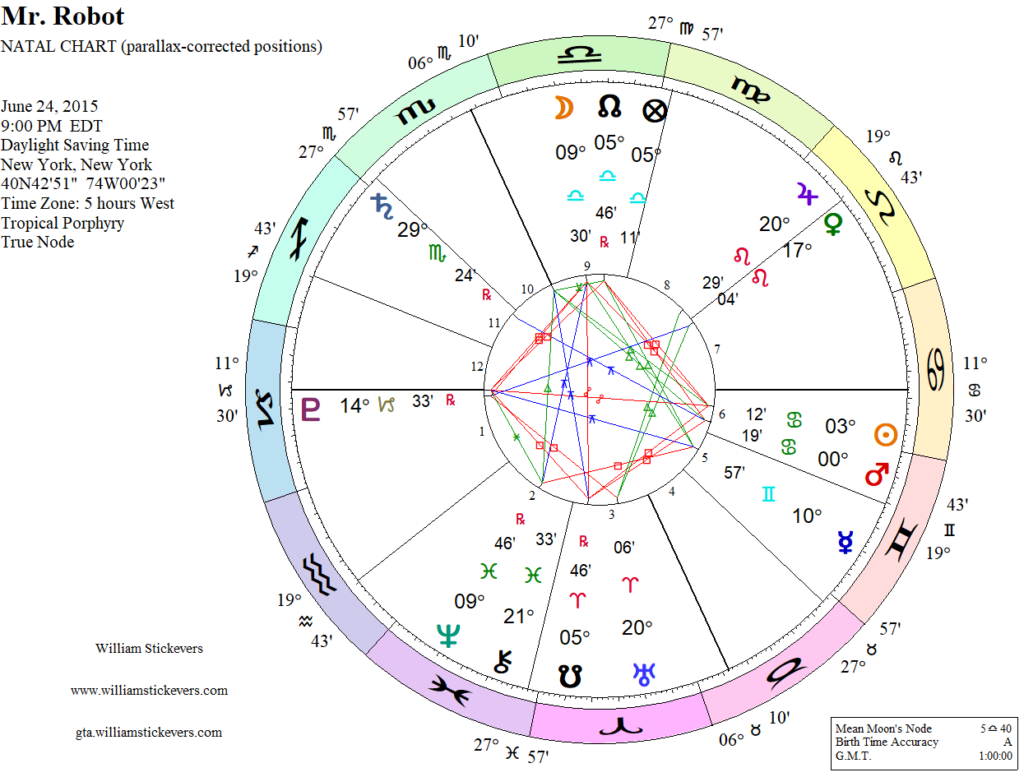
In episode 10, season 1, of the captivating psychological techno-thriller and mind-bending American TV series “Mr. Robot,” Elliot Alderson, a brilliant yet troubled computer programmer whose life takes a dramatic turn when he is drawn into the enigmatic and chaotic world of ‘Mr. Robot,’ a mysterious figure who leads an anarchist collective. Their ambitious goal? To dismantle the global financial system by launching a cyber-attack on E Corp, a colossal conglomerate portrayed as the epitome of corporate malfeasance and deep-state influence.
The series reaches a pivotal and emotionally charged climax in the tenth episode of the first season. Here, Elliot, grappling with the blurring lines between reality and illusion, confronts Mr. Robot with the accusation, “You’re not real.” This accusation triggers a profound and fervent retort from Mr. Robot, who challenges the very concept of reality in the modern world.
“Is any of it real? I mean, look at this. Look at it! A world built on fantasy. Synthetic emotions in the form of pills. Psychological warfare in the form of advertising. Mind-altering chemicals in the form of… food! Brainwashing seminars in the form of media. Controlled isolated bubbles in the form of social networks. Real? Do you really want to talk about reality? We haven’t lived in anything remotely close to it since the turn of the century. We turned it off, took out the batteries, and snacked on a bag of GMOs while we tossed the remnants into the ever-expanding Dumpster of the human condition. We live in branded houses trademarked by corporations built on bipolar numbers jumping up and down on digital displays, hypnotizing us into the biggest slumber mankind has ever seen. You have to dig pretty deep, kiddo before you can find anything real. We live in a kingdom of bullshit. A kingdom you’ve lived in for far too long. So don’t tell me about not being real. I’m no less real than the fucking beef patty in your Big Mac.”
This moment is more than just a high point in the first season of the show; it’s a profound commentary on the nature of reality and the influence of technology and media in our lives. It encapsulates the show’s central themes and offers a stark reflection on the state of modern society. It encapsulates the show’s central themes about the nature of reality, the impact of technology and media on individual perception, and the larger socio-political commentary the series aims to make.
This outburst reflects a deep and pervasive skepticism about the modern world’s authenticity and the influence of various institutions and technologies on our lives. It questions the very fabric of what we perceive as reality, suggesting that much of what we experience is manufactured or manipulated.
- Alternative Worldview: The series delves into the notion that our world is a construct, more akin to a fantasy. This perspective suggests that our understanding and experience of reality are heavily influenced, if not dictated, by external forces, especially in the digital age of artificial intelligence. It raises questions about the authenticity of our surroundings and the extent to which technology and media filter our view of the world.
- Synthetic Emotions: The reference to emotions being artificially induced or controlled by pharmaceuticals points (e.g., consumption of antidepressants and vaccinations) to a society that may have lost touch with genuine human emotions and experiences. It underscores a reliance on medication to navigate emotional landscapes, hinting at a deeper disconnect between our innate human nature and the complexities of mental health.
- Psychological Warfare: The show critiques the pervasive influence of advertising and media that is controlled by powerful corporate, non-state actors, and government entities, suggesting they are tools of mass psychological manipulation. This aspect of the speech speaks to the power of these mediums to shape desires, beliefs, and behaviors, often serving the interests of corporations and governments.
- Mind-Altering Chemicals: The mention of chemicals in food affecting our minds alludes to concerns over the impact of processed foods and artificial additives on physical and mental health. It’s a commentary on how even our basic needs, like nutrition, are entangled with broader economic and industrial interests that may not align with individual well-being.
- Brainwashing Seminars: The analogy of media as brainwashing seminars critiques how mass media can be used to propagate specific narratives, influence public opinion, and shape collective consciousness. It suggests a manipulation of information and the existence of a curated reality presented to the public.
- Controlled Isolated Bubbles: The series touches upon the concept of social networks as isolating echo chambers. This idea reflects the concern that digital platforms, while connecting people, also create fragmented realities where individuals are exposed mostly to viewpoints that reinforce their existing beliefs, further polarizing societies.
- Reality Questioned: The culmination of this monologue challenges the audience to reconsider what constitutes reality in the modern era. It implies that since the turn of the century, the influence of technology, media, and other external forces has significantly distorted our experience and understanding of the world.
The statement, “We haven’t lived in anything remotely close to it since the turn of the century,” implies a longing for a past perceived as more authentic and a criticism of the contemporary world’s constructed and manipulated nature. This monologue is a critical commentary on the state of modern society, touching upon themes of authenticity, control, and the impact of technology on human experience.
Pluto in Aquarius Themes In “Mr. Robot”
The themes explored in “Mr. Robot,” particularly those of a world built on the covert manipulation of reality through technology by a powerful ruling elite and questioning of established structures and institutions, resonate interestingly with the astrological significance of Pluto’s transit through Aquarius from 2024 to 2041. In astrology, Pluto is associated with transformation, power, and deep psychological processes, often bringing to light hidden truths and prompting significant change. Aquarius, on the other hand, is linked with innovation, revolution, technology, and humanitarian ideals.
- Technological and Societal Transformation: Aquarius is the sign most associated with technology, progress, and radical change. Pluto’s transit through Aquarius could signify a period of profound transformation in these areas. This correlates with the “Mr. Robot” theme of a world heavily influenced and perhaps controlled by a powerful technological elite, mirroring the potential for significant shifts in how technology influences society during Pluto’s transit.
- Revelation of Hidden Truths: Pluto is known for uncovering hidden truths and exposing underlying power dynamics. This could manifest as a societal awakening to the manipulative aspects of technology and media, similar to the show’s exploration of these themes. It might also herald breakthroughs in understanding how digital platforms influence psychology and social structures.
- Challenge to Established Systems: The anarchist group in “Mr. Robot” seeking to dismantle the global financial system parallels the Aquarian theme of challenging and revolutionizing existing structures. Pluto’s journey through Aquarius could bring about a reevaluation or upheaval of established systems, particularly those related to technology, finance, and governance.
- Psychological Warfare and Mass Consciousness: The series’ focus on psychological manipulation and the shaping of reality through media and advertising find echoes during Pluto’s transit in Aquarius. Therefore, Pluto in Aquarius could bring a deeper understanding through our confrontation with the collective shadow and its psychological impacts of the rule by secrecy and its use of artificial intelligence during the digital age.
- Social Networks and Community Dynamics: The theme of controlled, isolated bubbles in social networks from “Mr. Robot” aligns with the Aquarian ideals of the community but also warns of their perversion. This period could highlight both the potential and pitfalls of digital communities, possibly leading to innovations that foster genuine connectivity while addressing the echo chamber effect.
- Global and Humanitarian Issues: Aquarius is also linked with humanitarianism and global concerns. Pluto’s transit might amplify the focus on collective humanitarian issues, including those highlighted in “Mr. Robot,” like social justice, economic inequality, and the ethical use of technology.
In summary, the astrological significance of Pluto in Aquarius from 2024 to 2041 may parallel and provide a broader cosmic context for the themes of technological influence, societal transformation, and the questioning of reality as depicted in “Mr. Robot.” It suggests a period of deep, transformative changes, particularly in areas related to technology, society, and collective consciousness.
Responses