
60’s Counter-Culture Revolution: “White Rabbit” (Song 1967)

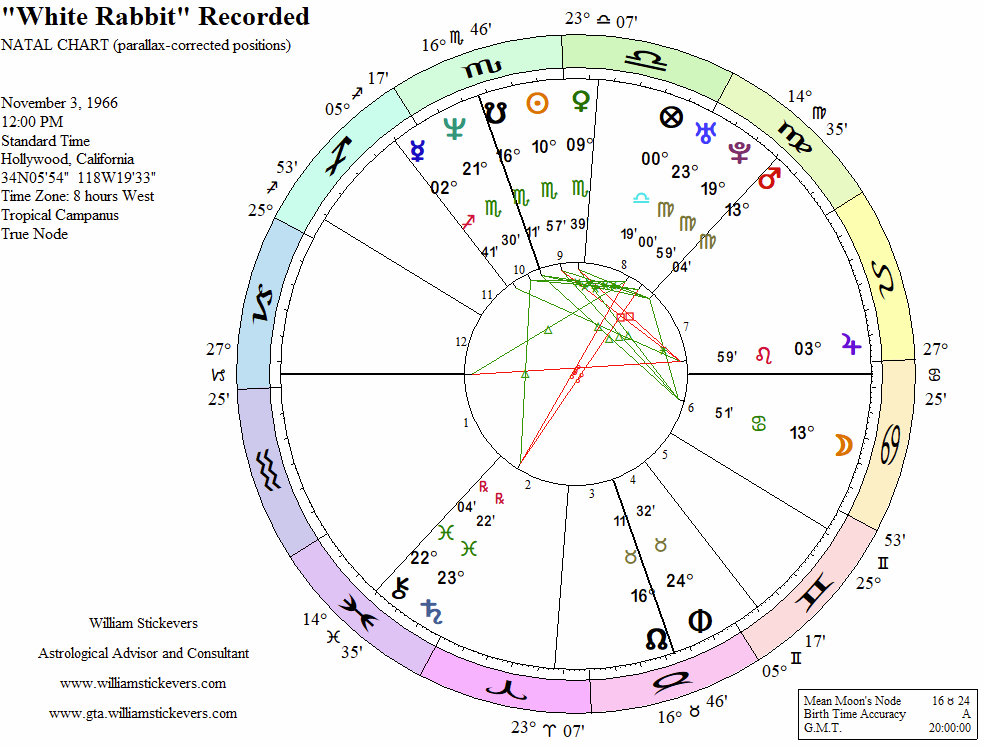
The Psychedelic Rock song “White Rabbit” was written by Grace Slick, who based the lyrics on Lewis Carroll’s book Alice In Wonderland. White Rabbit was one of Grace Slick’s earliest songs, written and recorded during the Uranus-Pluto alignment in 1965 or early 1966. White Rabbit was a hit single and was included in Jefferson Airplane’s 1967 album Surrealistic Pillow.

Like many young musicians in San Francisco during the era of the 60’s Counter Culture Revolution, Slick saw a surfeit of drug references in Carroll’s book, including the pills, the smoking caterpillar, the mushroom, and lots of other images that have trippy psychedelic connotations. White Rabbit uses imagery found in the fantasy works of Lewis Carroll: 1865’s Alice’s Adventures in Wonderland, and its 1871 sequel Through the Looking-Glass, such as changing size after taking pills or drinking an unknown liquid. It is thought that many of these were references to the holotropic effects of the psychedelic drugs, such as LSD and psilocybin mushrooms.

Slick noticed that many children’s stories involve a substance of some kind that alters reality, and felt it was time to write a song about it. Slick was inspired to compose a song based on this idea while taking LSD and spending hours listening to the Miles Davis album Sketches Of Spain during her psychedelic trip. The song is essentially one long crescendo similar to that of Ravel’s famous “Boléro”. The music combined with the song’s lyrics strongly suggests the sensory distortions experienced with entheogens.
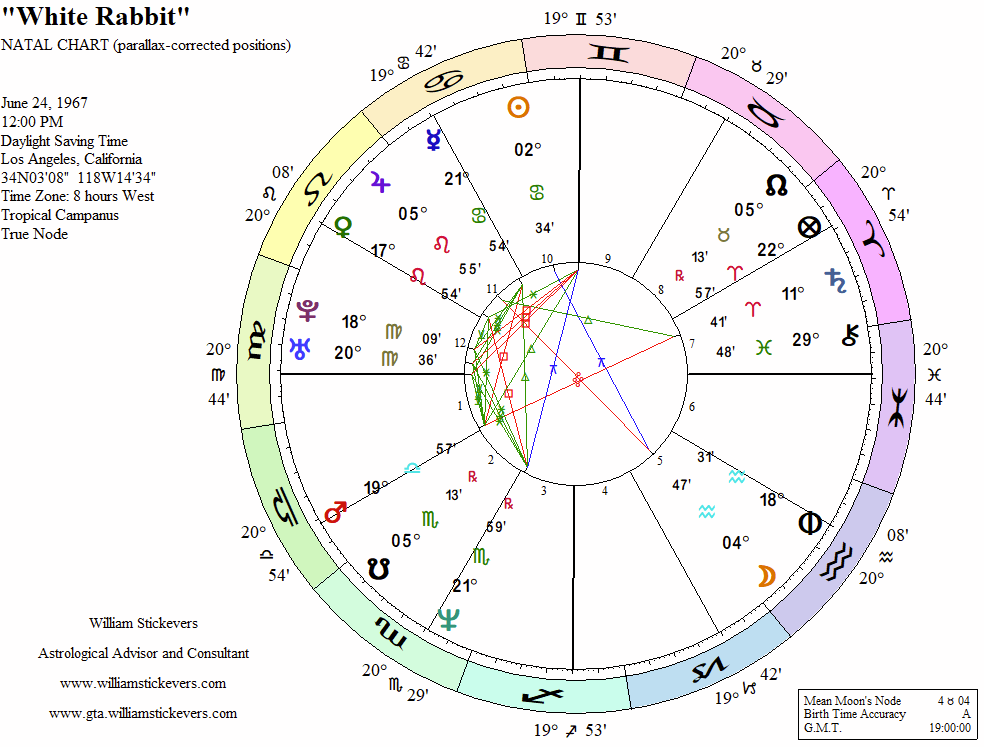
For Slick, “White Rabbit” “is about following your curiosity. The White Rabbit is your curiosity.” According to Slick, the line “feed your head” is about reading, as well as psychedelics feed your head by paying attention: read some books, pay attention. For her and others in the 1960s, drugs were a part of mind-expanding and social experimentation. With its enigmatic lyrics, “White Rabbit” became one of the first songs to sneak drug references past the censors on the radio. Even Marty Balin, Slick’s eventual rival in Jefferson Airplane, regarded the song as a “masterpiece”. In interviews, Slick has related that Alice in Wonderland was often read to her as a child and remained a vivid memory into her adult years.
White Rabbit was later used in pop culture to imply or accompany a psychedelic induced holotropic experience. The song was ranked number 478 on Rolling Stone‘s list of the 500 Greatest Songs of All Time and appears on The Rock and Roll Hall of Fame’s 500 Songs that Shaped Rock and Roll.
Responses