
Uranus-Saturn Square Alignment 2021 – 2022: Tokenization of Markets

Tokenizing Markets
Tokenizing assets is the act of digitally representing securities (such as stocks and bonds), commodities, collateral, future deliveries, and almost everything else on to the blockchain database located on a Decentralized Excchange (e.g. Unisys) where transaction details on these assets reside in a public database for all to see.
Tokenized assets DO NOT REQUIRE intermediaries to trade or settle securities. Banks and brokers can still play a central role in introducing buyers and sellers and making markets when needed. But the system is not beholden to them.
For example, if buy 100 shares of tokenized stock in Ford Motor Company (F), and then you decide to you want to sell it, if some within the decentralized exchanges agree on a price. You and the buyer would use unique electronic keys to instantaneously settle the security and cash exchange.
In the example, there is no bid/offer spread or broker fees although it might incur a very small exchange fee. The settlement would not take two days or carry the risk a broker fails. Also, bids and offers would be shown worldwide without being limited to one broker, exchange, or time zone.
Tokenization is not just about better pricing, risk reduction, and trading efficiencies. When intermediaries playing less of a role, systematic risk lessens.
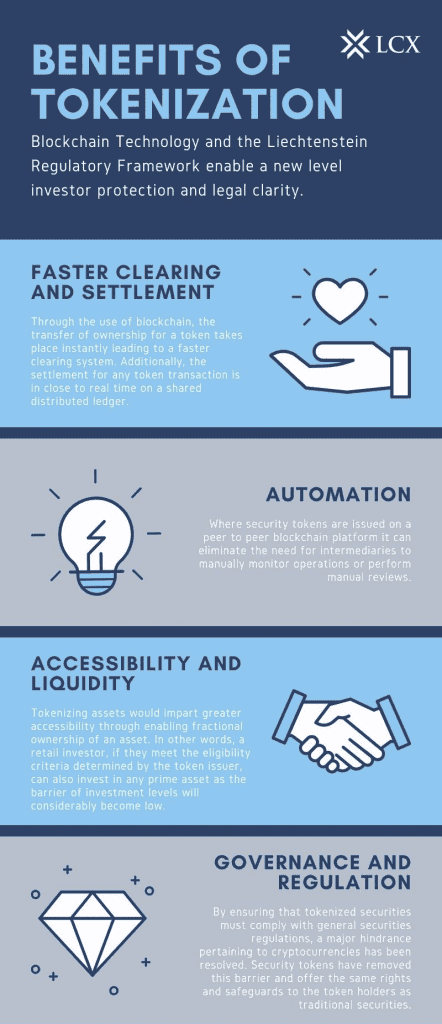
In a tokenized world, the Lehman default would have been avoided with real-time collateral management and pricing. Ponzi Schemes like Bernie Madoff are impossible to perpetrate as regulators can more easily see if there are actual “assets.”
“It’s different because we can build a system based on assets rather than a system built on institutions.” – Charlie McGarraugh
The current trading environment is entirely dependent on institutions such as JP Morgan, Goldman Sachs, Citadel, and others. These institutions take on risk, provide liquidity, and profit handsomely as intermediaries.
They have enormous corporate profits and generous wages to protect. There is no doubt these firms will use their strong lobbies in Washington, D.C. with overwhelming support from the Fed and U.S. Treasury to slow down efforts to tokenize assets in the fast-growing Decentralized Finance space.
Tokenizing Game Stop
During the recent Gamestop (GME) fiasco, Robin Hood (RH) reportedly required emergency funding to cover collateral requirements. Without funding, RH may have failed at costs to its clients. Additionally, RH and other large brokerages restricted trading, causing angst and significant losses for many retail GME investors.
With the GME/RH situation in mind, let’s consider the GME episode in a tokenized realm. Shorting stocks in GME exceeded 100%, meaning more shares of Gamestop were held by investors than existed. Under the current exchange system, a broker can lend its clients’ shares WITHOUT the client knowing so. When this occurs, two investors own the same shares, and one investor is short the shares. The transactions net out but they introduce major risk unknowingly to the client (who owns the stock) if the broker fails.
However, with tokenized shares on a Decentrizlied Exchange, the risks and rewards of lending securities are only taken by those willing and wanting to accept the risk. They are also paid for taking the risk. Further, trade settlements happen immediately, eliminating any counterparty risk. Lastly, retail investors do not have to depend on a conflicted third-party intermediary or insolvent broker.
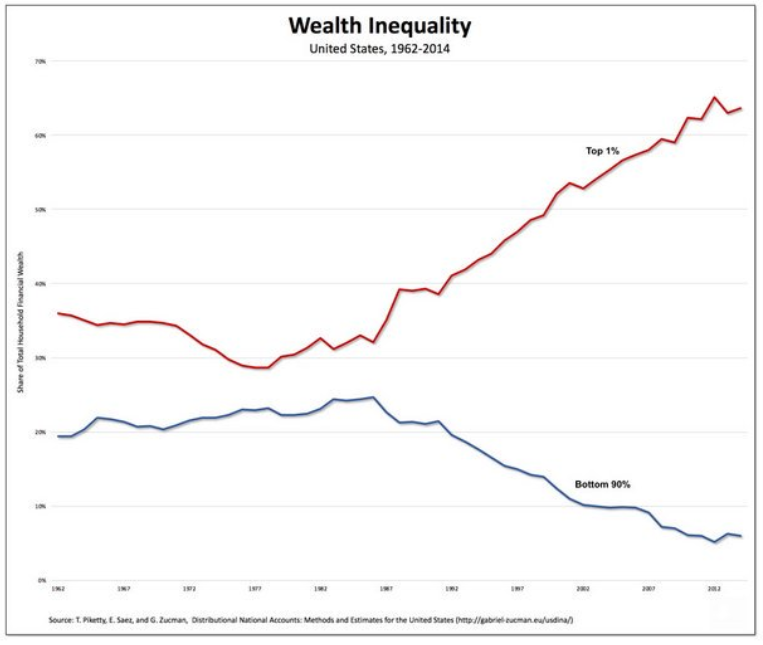
The more freely and uninhibited money can flow throughout an economic system, the more the economy benefits all of its people. Intermediaries, like Wall Street institutions, by definition, present an impediment to the flow and velocity of money in the economy. The purpose they serve comes to increase the wealth of the financial-political elite and the privileged class for the great good has a significant cost to society. Before the blockchain revolution, the establishment could argue the benefits outweighed the costs. Today that is no longer true.
The Bottom Line: The Saturn-Uranus square alignment will tune-up capitalism’s engine through radical innovations to find more efficient ways to operate financial markets to provide more to the many. The radical advancements of blockchain technology in the coming months ahead will make our markets and the economy more efficient and fair presenting a a better alternative for tomorrow.
Responses