
TOP-20 Cryptocurrency and Bitcoin Wallets in 2020

Cryptocurrency wallets explained
The best crypto wallet has very little in common with wallets, in the traditional sense: no assets are kept directly inside the Bitcoin (BTC) wallet, neither in their classic form nor as binary code.
What is a crypto wallet?
A cryptocurrency wallet (crypto wallet, Bitcoin (BTC) wallet) represents a special class of computational frameworks or physical device able to authorize blockchain-based transactions. Essentially, it may send, receive, and operate digital assets. The best crypto wallet reliably secures keypairs to protect crypto investments.
How to get a crypto wallet
People obtain software crypto wallets by activating an account (web client, cloud storage) or through the installation of the crypto wallet software on a desktop or portable computer. Also, the best crypto wallet could be developed manually, but this requires professional skills in Python coding. Holders also create ‘Hard’ wallets by setting up a digital gadget (hardware) and printing a keypair on paper or by engraving it on a metal plate.
How to transfer crypto to my crypto wallet
When a crypto wallet is active, the user has its public key. The blockchain uses this to identify the unique address of the token holder. Everyone who has a public key can authorize a crypto remittance to a certain address with the sum and the name of the token required. The confidentiality of the private key is of crucial importance, the unveiling of which would put the users’ crypto riches at significant risk.
What is a hardware crypto wallet?
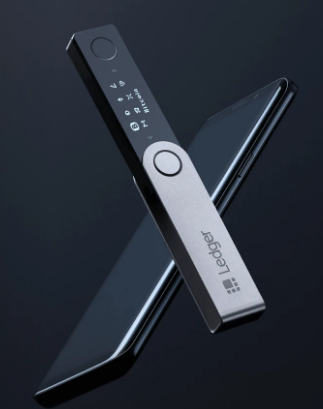
Hardware crypto wallets constitute a high-end class of electronic gadgets that consist of a core processor, touchpad, and display. It defends the integrity of keypairs and authorizes blockchain transactions. This gadget needs a USB or Bluetooth connection to your computer in order to process operations.
What is a software crypto wallet?

A software crypto wallet refers to a computational environment utilized to operate your tokens. Typically, it represents an in-browser cloud interface or downloadable program. The most secure crypto wallet develops the keypair and allows the token holder to store it in extreme confidentiality. Typically, the best crypto wallet in this class allows traders to conduct multi-chain token conversion.
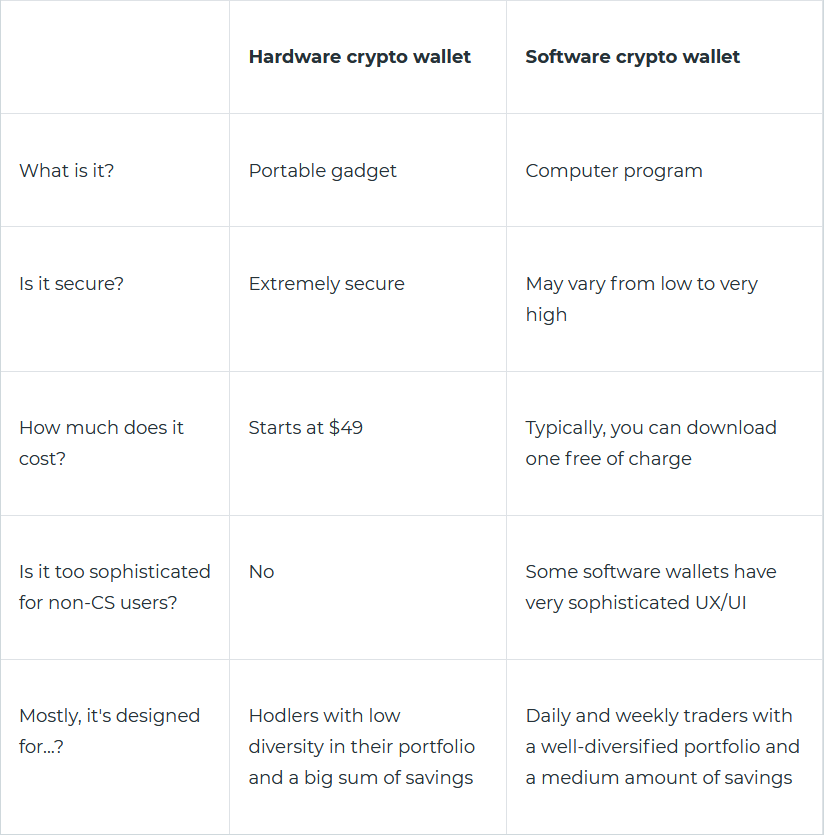
Hardware vs Software crypto wallet comparison
TOP-20 LIST of Cryptocurrency and Bitcoin (BTC) Wallets in 2020
- Blockchain.com is an ‘old but gold’ wallet for Bitcoin (BTC) and Ethereum (ETH). It powered native explorers for the first two blockchains.
- Coinbase.com was the first in the sector to enable crypto purchasing via credit cards. Also, The services work with corporate entities.
- Opera is a unique built-in browser-based wallet. It also supports dApp surfing with ERC-type tokens.
- Vexel is a multi-task wallet and crypto conversion ecosystem operated through a Telegram bot and issues anonymous crypto vouchers.
- Bitamp is a decentralized client-side wallet for Bitcoin (BTC) that also serves as an emergency recovery tool for other sorts of Bitcoin (BTC) wallets.
- Prizm produces a high-performance multi-currency wallet built around native PZM digital assets. It has an unmatched approach to security and a user-friendly interface.
- Guarda Wallet is a non-custodial product designed for 45+ protocols and tokens. Besides that, TRX staking and BTT rewards are implemented.
- Ledger Nano X is a Bluetooth-operated hardware Bitcoin (BTC) and crypto wallet. It can process dozens of blockchain applications and conduct transactions of all major coins.
- Trezor Model T is a cutting-edge crypto hardware wallet by Satoshi Labs with a high-quality LED touchscreen that supports all of the crypto behemoths including XRP, Monero (XMR), and Cardano (ADA).
- Trezor ONE is a first-gen hardware wallet powered by a reliable processor, Cortex M3. As its UI is intuitive, it perfectly suits newbies.
- Ledger Nano S can operate between 3 to 7 of the most demanded protocols (Bitcoin (BTC), Ethereum (ETH), XRP, Bitcoin Cash (BCH), Litecoin (LTC), Dash (DASH)).
- Atomic Wallet is a multi-currency wallet, decentralized and anonymous. It also acts as a staking environment with passive income offers for holders of PoS-based altcoins.
- BRD is a simple Bitcoin (BTC) mobile crypto wallet. BRD utilizes every device’s built-in hardware encryption to keep users’ funds safe.
- Crypterium Crypto Wallet app solves the issues of mainstream adoption of Bitcoin (BTC) transactions as it uses SMS for blockchain remittances.
- Enjin is an ecosystem powered by Enjin Coin (ENJ), an Ethereum-based protocol for seamless cross-chain interactions.
- Exodus Wallet is a high-tech project, oriented for privacy geeks. With the Exodus mobile crypto wallet, Face or Touch ID conveniently secures all assets.
- Lumi Wallet is a multi-currency crypto software wallet with built-in exchange options. Some altcoins can be bought directly into Lumi Wallet, e.g. MKR, USDC, OMG, ARN, etc.
- Luno Bitcoin (BTC) software wallet was launched in 2013 by a South African company. Recently, it enabled multi-signature authorization for some types of tokens.
- Lykke crypto software wallet enables interoperability between credit cards, wire transfers, and digital assets in a decentralized manner.
- Takamaka performance is powered by a native blockchain and has a number of development tools for Java devs to build dApps atop it.
I am a newbie and the information above really help me. Thank you William for posting this!
I am not such a newbie, but this informatio was fantastic! I learned about new wallets with different features. Thank you so much