
2020 Election Nuclear Scenario

Trump’s long-shot strategy seems to have been unveiled by the President himself: “We are going to be counting ballots for the next two months (…) We have the advantage if we go back to Congress. I think it’s 26 to 22 or something because it’s counted one vote per state.”
Trump’s statement was a reference to the 12th Amendment of the U.S. Constitution, if no candidate gets a majority of Electoral College votes, then the House of Representatives picks the president out of the top three finishers. This would also happen in a 269–269 Electoral College tie.

Under the 12th Amendment: if State Electors that make up the Electoral College can’t agree on a President on December 16th, the decision goes directly to the House of Representatives who will on January 6th, 2021. In this scenario, each of the 50 states gets one vote. Therefore small GOP-controlled states such as Alaska, North Dakota, South Dakota, and Wyoming (each with one Republican in the House) have the same weight as California. California’s 53 representatives, 45 of whom are currently Democrats, would have the same weight as the vote cast by Wyoming’s single Republican representative.
There are in total fewer Republicans in the House; Democrats outnumber them 232 to 197. But on a state-by-state basis, Republicans have the majority of 26 state delegations while Democrats control 22, with two – Pennsylvania is split, and in Michigan, the balance of power comes down to Libertarian Representative Justin Amash.
If it comes down to a vote it is likely the Republican majority of state delegations in the House will vote to confirm Trump as president. However, House Democrats, led by Speaker of the House – Nancy Pelosi, would also likely use her majority, and invoke Section 5 of Article 1 of the Constitution, to flip the situation around and ensure that the Democrats control more state delegations than Republicans do.
In this scenario, Pelosi would likely declare the electors invalid, refuses to count the votes, and claim that the House has the power to declare Biden, the winner. As a result, Senate Republicans would most likely rally behind Trump while Pelosi and the Supreme Court face-off over who has authority.
In refusing to acknowledge the decision of the House, Trump will likely contest Pelosi through the Republican-dominated Supreme Court (which will include Trump’s nominee Amy Coney Barrett). The Supreme Court could declare Pelosi’s actions unconstitutional. But Pelosi could ignore them and say the Constitution rests these decisions with her branch of government – Congress, not the Supreme Court.
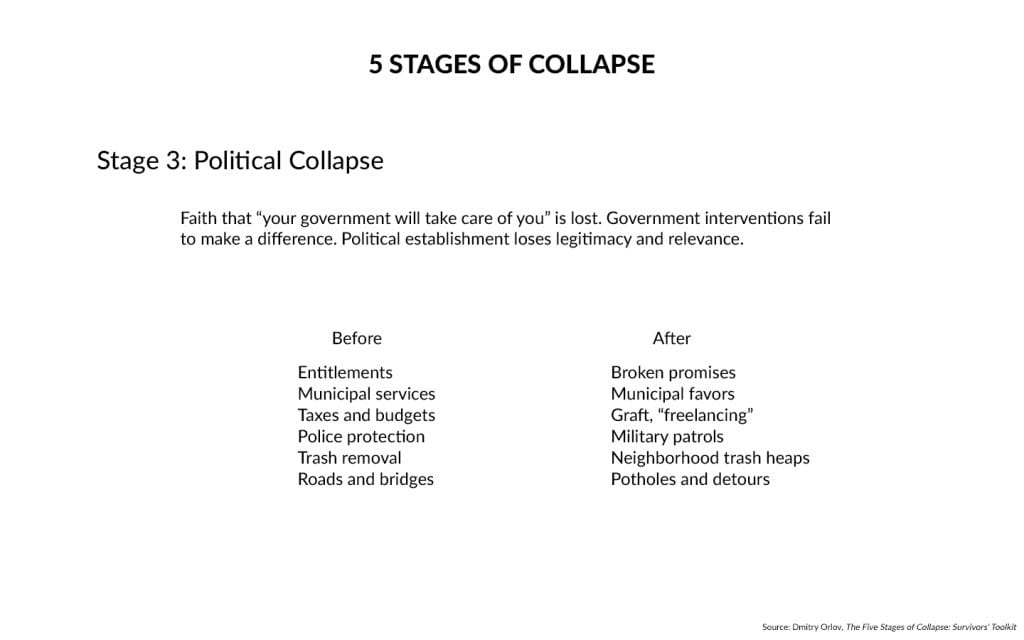
At this point, it may come down to who has the keys and support of the military, Pelosi, or Trump?
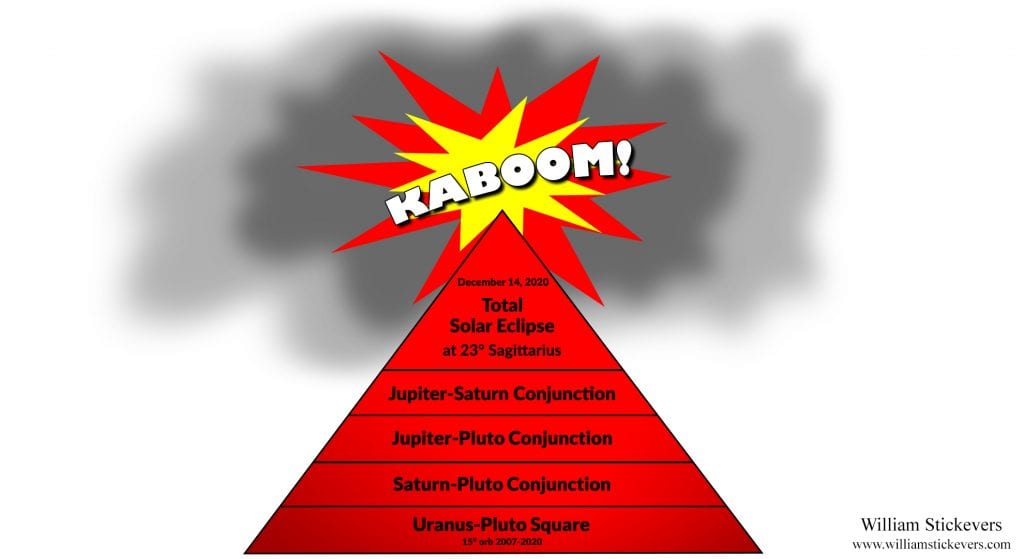
This sounds horrible, like all hell may break loose
Indeed!
This sounds like a X event if not it will do till one comes along
Agree!
william, can you please repost the other stages…
Sure, Ricardo!