
Astrological Commentary on Nitzsche’s “Beyond Good and Evil”

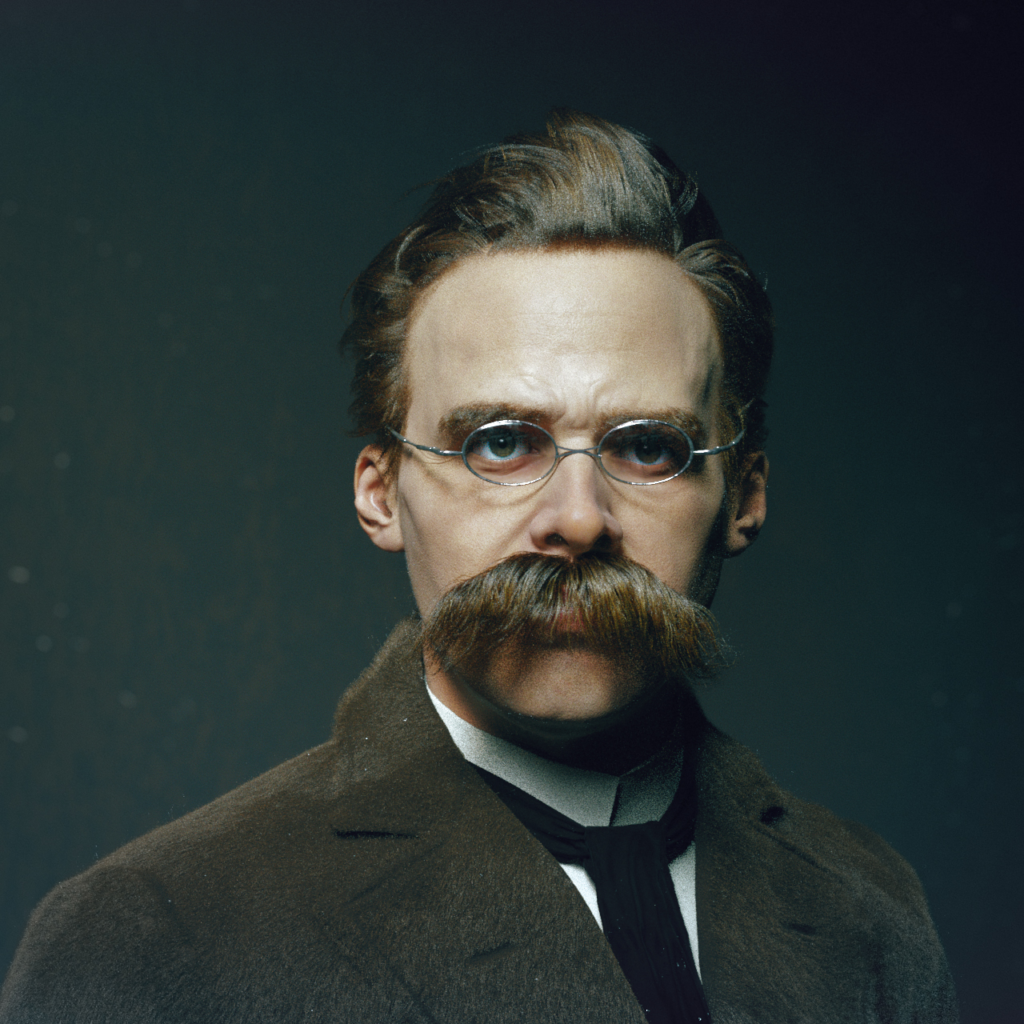
“Every ideology is the personal confession of its author, which discloses the innermost driving forces of his nature. However abstract and fantastic the ideological views of a philosopher may be, his work of abstraction still reveals clues to his psychology. The link between abstract ideas and the psychology of their originator is the same as that between a work of art and the artist’s life.
Moreover, as an ideology develops, it attracts people who have a psychological affinity with it, although they may be unaware of this affinity. Thus, every ideology has a subjective – i.e., personal and psychological – and an objective meaning. It affords expression to the life and character of its representatives, and it also represents the nature of the psychological types who are attracted to it.
Psychology should be recognized again as the queen of the sciences, for whose service and preparation the other sciences exist. For psychology is once more the path to the fundamental problems.”
Friedrich Nietzsche
“Beyond Good and Evil” – 1886
Friedrich Nietzsche’s expanded quote from “Beyond Good and Evil” illuminates several important nuances in the relationship between ideology, psychology, and human nature. Not only does he assert that every ideology serves as a personal confession of its author, revealing the inner psychological dynamics, but he also suggests that ideologies attract individuals who have a psychological affinity for them. This points to a kind of ideological magnetism, where not just the creator but also the followers of an ideology are bound to it through unseen psychological forces.
The idea that ideologies have both a subjective and objective meaning extends the scope of their influence and importance. Subjectively, an ideology provides a canvas for individual expression, reflecting the inner complexities of its adherents. Objectively, it serves as a societal or cultural entity that shapes interactions, institutions, and, ultimately, the course of history. The twofold nature of ideology—both personal and collective—strengthens Nietzsche’s call for psychology to reclaim its throne as the “queen of the sciences.”
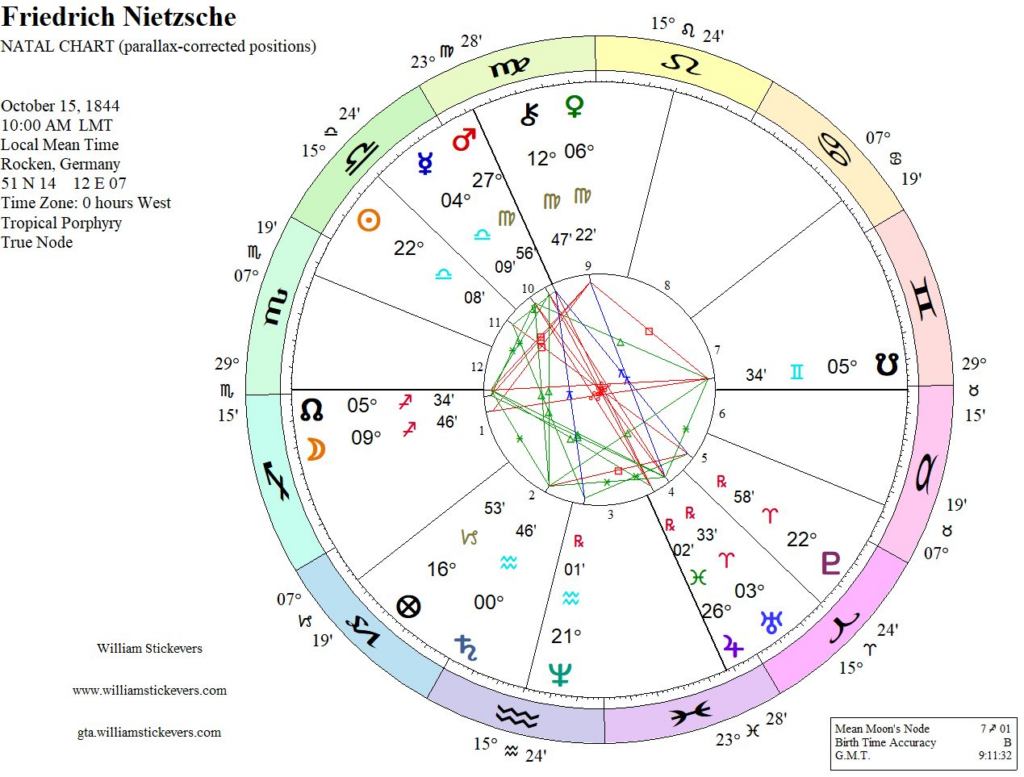
This view matches Nietzsche’s own explorations of morality, religion, and meaning through the lens of his inner world. With the Sun opposite Pluto in his natal chart, he embodied the agonistic struggle between light and shadow, constantly seeking to synthesize Apollo and Dionysus within himself. He exegeted his own soul’s journey in his writings, making public his “personal confession,” in the words of this quote.
This perspective also adds multiple layers of depth to the practice of astrology, particularly in the archetypal realm. Astrological configurations can be viewed as both subjective experiences and as cosmic patterns that influence societal trends. For instance, a particular planetary aspect in a person’s natal chart may influence their psychological predispositions, which in turn may lead them toward specific ideologies. But these same planetary configurations might also be in play on a larger scale, influencing societal moods, ideologies, and even geopolitical events.
Key Takeaways:
- Ideologies serve as a personal confession of their authors, revealing their psychological underpinnings.
- Individuals are attracted to ideologies that resonate with their own psychological make-up, suggesting an ‘ideological magnetism’.
- An ideology has a subjective element, serving as a canvas for individual psychological expression.
- Objectively, ideologies act as societal or cultural entities that influence the course of history and human interaction.
- Psychology is posited as a central science by Nietzsche, crucial for understanding the complexities of ideologies and their impact.
- Nietzsche’s own natal chart, with the Sun opposite Pluto, reflects his personal psychological struggle and quest for synthesis, which permeates his work.
- Astrological configurations are seen as symbolic of both individual psychological experiences and broader societal trends.
- Planetary aspects can predispose individuals toward specific ideologies while also reflecting larger historical and societal movements.
Note: Friedrich Nietzsche was a German philosopher born on October 15, 1844, in Röcken, Saxony, Prussia, and he passed away on August 25, 1900, in Weimar, Thuringian States. Nietzsche is known for his significant contributions to philosophy and cultural criticism during the late 19th century.
Responses