
Micro-Biologist Uses Reddit to Share Hidden Truths About Grey Exo-Biospheric-Organisms

“The EBOs are morphologically very similar to the grey aliens that are part of modern folklore. … (but) the grey skin … is, in fact, a biosynthetic film which likely serves to protect the EBO from a hostile environment. …Under the grey film, the epidermis is rather white … without any hair. …Smell of burnt hair and ammonia is present when the grey film covering is removed.”
— Anonymous Reddit User first posted Wednesday night, July 5th, 2023
Spanning from the late 2000s through the mid-2010s, I was employed as a molecular biologist for a national security contractor, investigating Exo-Biospheric-Organisms (EBO). This assignment encompassed decoding the genomic and proteomic structures of these entities. While the study of such beings had been ongoing for several decades under different initiatives, breakthroughs in DNA sequencing technologies during the late 90s fueled unprecedented progress in this field. Significant discoveries since then have significantly expanded our comprehension of the genome and proteome of these organisms, revealing unsettling insights about our existence in the cosmos. In essence, we found that the EBO genome is a hybrid, merging elements from our biosphere and an unidentified one. These entities appear to be artificial, transitory, and disposable organisms, engineered with a purpose that we only partially grasp. I will further elaborate on these statements after providing a brief overview.
My intention in revealing these secrets is straightforward. I hold the conviction that every individual is entitled to truth, and for humanity to progress, certain institutions and organizations that might not withstand the revelation of these truths in the long term need to be exposed. Although I recognize my limited influence in this regard, I maintain that minor leaks like this one are essential in combating the misinformation surrounding this subject. Once governments inevitably disclose these secrets, society will experience significant turbulence. However, I believe that postponing this disclosure will only exacerbate the situation. My decision to remain anonymous in sharing my knowledge stems from concern for my personal well-being and that of my family. I recognize that this may hamper the reach and credibility of my message, but it’s a risk I’m willing to take. This forum was chosen for its combination of anonymity and popularity. To ensure my anonymity, I’ll intentionally be ambiguous or even contradictory about any details that could lead back to me (date, education, role etc.), including the insertion of misleading information. I want to emphasize that this approach will not be applied to information relevant to the research subject.
Please bear with me if any of my explanations seem challenging to comprehend. Certain segments of my text are quite technical, making it difficult to strike a balance between simplification and scientific accuracy. I’ll continue by talking about myself. You might question why I would discuss myself knowing that the information could be misleading. The reason is simple: I aim to offer some perspective on the kind of people who work in this field, ordinary scientists. I have a Ph.D. in molecular biology. I didn’t actively pursue involvement in this program. Instead, it was a serendipitous encounter with a senior scientist at a conference, where I was presenting a poster on my Ph.D. research, that led me here. Reflecting on it, I don’t think my presentation was what impressed him, as my project wasn’t particularly groundbreaking. I believe it was more about my professional demeanor and the ease with which I networked. Soon after I graduated, I received a call from this individual offering me a position, which at the time seemed like a regular laboratory job.
I underwent three progressively unusual interviews, each in a different location, where my scientific background and knowledge became progressively less relevant. The first interview was with two of the senior scientists. The subsequent two were with individuals I never encountered again and who didn’t appear to have any interest in science. Following these interviews, I was taken to a fourth location where a corporate lawyer presented me with a Non-Disclosure Agreement (NDA) and ensured I comprehended its contents and the consequences of violating it.
My initial weeks of employment were the most memorable, even though I largely spent this period in a drab archival room. The time was primarily spent familiarizing myself with the study subject. There were no guides or reference books, only a collection of dry reports, memos, presentations, procedures, and Standard Operating Procedures (SOPs). Most of these documents concerned EBO biology, but some delved into other topics like their nutrition, religion, or culture. There was no information on their technology.
As mentioned earlier, the project aimed to improve our understanding of the EBO genome and proteome. This mission involved a team of around twenty scientists, four senior scientists, and a director. The primary responsibility of the scientists, myself included, was to carry out the technical work. Given that all scientists held a Ph.D., we were arguably overqualified for these essentially technician roles. The senior scientists, who fully utilized their credentials, were responsible for designing assays and had supervisory roles. They also trained new employees and occasionally performed technical work. The director, who was seldom on-site, outlined priorities for the senior scientists. His rare visits were to attend meetings. Apart from the scientific personnel, there were security personnel contracted from outside companies. There was no janitorial or maintenance staff, with scientists assuming these roles. Furthermore, logistical considerations necessitated that every scientist was capable of performing any technical task.
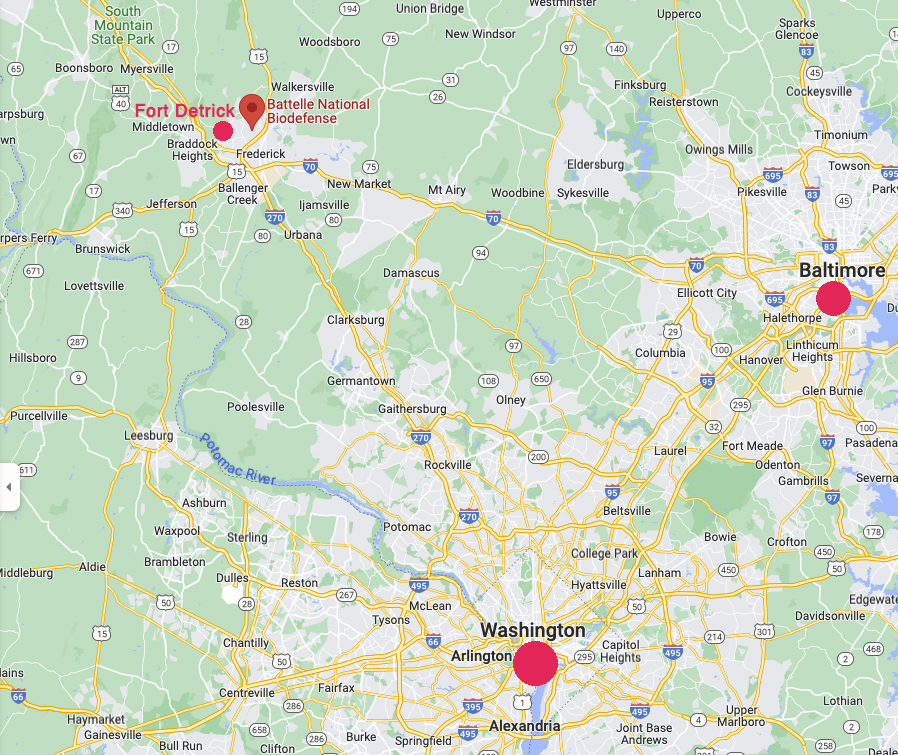
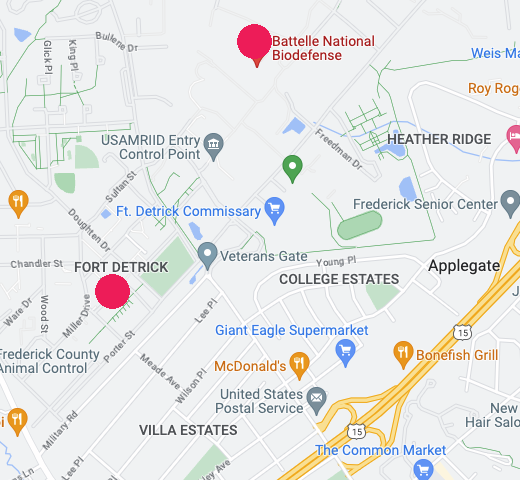
The laboratory is situated in Fort Detrick, Maryland, in a building that also accommodates legitimate biomedical research. Covert operations take place in a secluded basement section, away from the sight of regular workers. Surprisingly, the biosafety level for this research is not at the maximum level. The lab housing EBO samples or derived cell cultures is categorized as BSL3, while the lab where assays are conducted falls under BSL2. The BSL3 section of the facility, accessible via an antechamber from the BSL2 area, includes a freezer room and a cell culture lab. EBO specimens are preserved at a nominal temperature of -80°C in horizontal freezers. To maximize preservation, they are stored in vacuum bags, and the room’s air is regulated to minimize humidity. There are only four specimens, and none of them are intact. The level of trauma they appear to have suffered suggests a violent end. It’s acknowledged that more EBO specimens exist at other locations. The cell culture lab is where cell lines derived from EBOs are grown. The BSL2 section, where assays, immunohistochemistry, genetic engineering, immunocytochemistry, storage, etc., are conducted, also contains a cell culture lab for more traditional cell lines. Aside from the labs, the facility is equipped with typical office amenities. However, internet access is restricted to senior staff and above, with an intranet provided for bioinformatics requirements.
Next, I will discuss the biology of these entities, starting with genetics, followed by their macroscopic anatomy, and finally, their biological systems. The information I share here is a mix of my observations and readings. I will draw many comparisons with human anatomy, as it provides the most logical reference.
Genetic Structure
Let’s start by exploring their genetic makeup. Like us, their genes are DNA-based, a discovery that initially baffled me. We would normally expect extraterrestrial lifeforms to have genetic systems built on utterly alien biochemistry, but remarkably, this isn’t so. This intriguing fact leads us to several deductions. The most immediate one is that both our biosphere and theirs possibly originate from a shared ancestry. They are eukaryotes, meaning their cells possess a nucleus that houses genetic material, indicating a likely separation of our biospheres post the evolution of this organism type. The term “Exo-Biospheric-Organism” is somewhat misleading, but since it’s deeply rooted in history, we still use it. Not only is their genetic system similar to ours, but it’s also compatible with our cellular machinery, implying that a human gene can be integrated into an EBO cell and translated into a protein and vice versa. Some differences in post-translational modifications can render the final protein non-functional, but we will address these later. Their genome is organized into 16 circular chromosomes.
You may be familiar with the concept of the intergenic region or “junk DNA”, which are essentially DNA sequences that do not code for proteins. These sequences are remnants of evolution, transposons, deactivated genes, etc. To put it into perspective, in humans, the intergenic regions constitute roughly 99% of our genome. Though these sequences are not entirely purposeless and serve roles like histone anchoring, shielding coding DNA from radiation, or acting as alternate open reading frames, their use is largely marginal.
One striking aspect of the EBO genome is the consistency of these intergenic regions. The same sequences repeat consistently, and the gaps in base pairs between the genes remain almost uniform throughout their genome, resulting in a minimalist, highly compact genome that is significantly smaller than ours. Moreover, the number of protein-coding genes is considerably less than ours, likely due to genetic optimization and the absence of certain biological processes in EBOs. The uniformity of these sequences strongly suggests these beings are artificial, as no complex organism on Earth exhibits such elegance in its sequences. Such characteristics can only be attributed to genetic engineering and not evolutionary pressure.
On the subject of genetic engineering, post-sequencing of their genomes revealed a conspicuous universal feature in the 5′ of the regulatory sequence of each gene known as the Tri-Palindromic Region (TPR). TPRs are 134bp sequences that contain three distinct palindromes. In genetics, a palindrome is a DNA sequence that is identical when read in the same direction on both DNA strands. These serve both as a marker and a binding site for proteins. The TPR, comprising the three palindromes, also includes a unique chromosomal address and a gene address, providing a precise location for the gene in the genome. Such precision in gene location is unheard of in our biosphere and can only be a result of extensive genetic engineering.
TPRs open up several possibilities. One suggests that EBO geneticists can insert or remove a gene from a cell far more precisely and efficiently than our technology permits. There are no proteins in the EBO genome that interact with TPRs; rather, it’s believed that these are targeted by external genetic engineering tools, possibly used at the zygotic stage of embryonic development. The nature of these tools remains uncertain, but they are unlike anything we have. The lack of these proteins in their genome is another sign of their artificial nature. Given the high probability of the artificial nature of their genome and the apparent ease of modifying it with biomolecular tools, it’s plausible that there could be individual variations depending on their role and function. Essentially, an individual could be genetically engineered to possess traits that give it an edge in performing a particular task, similar to how soldier ants and worker ants have different roles in an anthill. These are, however, speculations. So far, only one individual genome has been sequenced, and any definitive statement on genetic variations between individuals would be premature.
I have talked extensively about intergenic regions now let’s briefly address intragenic sequences. While crucial, there isn’t much to say about them. Their genes, like ours, contain silencers, enhancers, promoters, 5’UTRs, exons, introns, 3′ UTRs, etc. Many genes are analogous to ours, which isn’t surprising given the compatibility of our cellular machinery. What’s alarming is that some genes match, base pair for base pair, with known human or even some animal genes, suggesting a rather crude copying and pasting than any artificial refinement. The purpose behind this is unclear and still subject to speculation. There are also many unique genes not found in our biosphere whose roles have yet to be identified. Deciphering the function of these novel genes is a prime objective of the program. This mix of familiar and alien genes further attests to the artificiality of EBOs.
As of my involvement, the mitochondrial genome had not been sequenced. However, it’s safe to presume that this genome would also be streamlined and possibly feature some form of TPR.
Transcription and Translation and Protein Expression
Regarding transcription, translation, and protein expression, I have briefly touched upon the differences in post-translational modifications between human and EBO. This isn’t surprising, as variations are common among different terrestrial species. Turning a DNA sequence into a functional protein is a complex process involving hundreds of protein intermediates, each playing a critical and specific role. Any minor deviation in this sequence can lead to functional irregularities in the final product. Therefore, it’s not surprising that initial attempts to transfuse EBO genes failed to produce the desired functional protein in human cell lines. Thankfully, what I presume was the effort of another team at a different location resulted in the creation of an EBO cell line named EPI-G11, derived from epithelial tissues. This allowed us to transfuse and overexpress proteins of interest to eventually purify and study them. We utilized a biological ballistics delivery system (gene gun) for our transfusion needs, as other methods were ineffective with this cell line.
Gross Anatomy
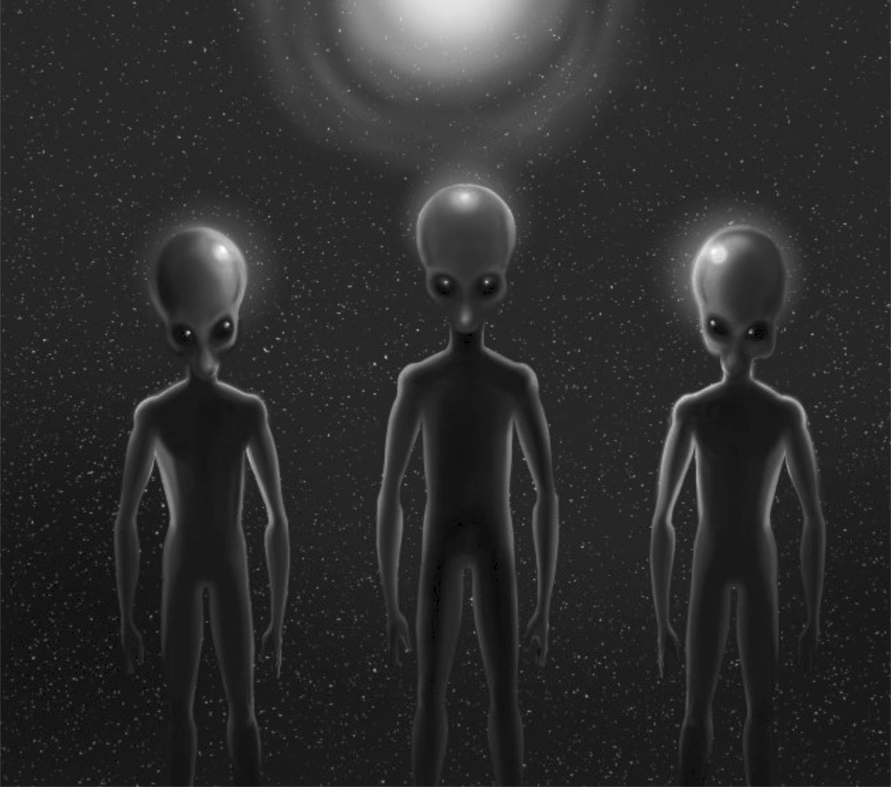
In terms of gross anatomy, their morphology is strikingly similar to the grey aliens popularized by modern folklore. They stand around 150cm tall and feature two arms, two legs, and a head, with some notable differences.
Skin: The commonly described grey skin is actually a biosynthetic film that seems to provide protection against a hostile environment. It does not offer substantial protection against temperature fluctuations but is sufficient for a liquid barrier. This film might offer other benefits, though my knowledge here is limited. Underneath this film, the epidermis is quite white, smooth, hairless, and appears greasy, according to some reports. Numerous pores pierce the skin, linking the epidermis to glands in the hypodermis, possibly part of the excretory-sudoriferous system, which could explain the distinct smell.
Head: The head houses two large eyes, two nostrils devoid of any protrusion, a narrow lipless mouth, and two ear canals without auricles. There is a mandible, but the muscles are rudimentary. The oral cavity lacks teeth or a tongue. The nasal cavity is compact and does not ascend cranially but extends axially. There seems to be no olfactory bulb equivalent in the nasal cavity. The mouth leads directly to the esophagus and the nasal cavity to the trachea, with no communication between the two.
Eyes: The eyes are encased in a translucent biosynthetic sheath that provides environmental defense, much like our skin does, but it also offers protection from specific light intensities and wavelengths. Underneath this film lies a larger, more conventional eye, about thrice the size of a human eye and without eyelids. This indicates superior night vision, making the semi-opaque covering appear contradictory unless it’s needed in brighter environments. Their eyes have a similar color scheme to their skin: a grey iris, a black, oversized pupil, and a sclera the same shade as their skin. They possess a rounder lens than humans and highly developed muscles for adjusting focus. Their retina houses at least 6 types of cone cells, each responding to a specific wavelength band, allowing for a broader visible spectrum.
Ear: The outer ear lacks an auricle, and the ear canal is unremarkable. The inner ear resembles a typical human, although it exhibits a more pronounced cochlear curvature, likely leading to enhanced low-frequency hearing.
Brain: The brain is tetraspheric, meaning it consists of four primary sections divided by transverse and longitudinal fissures and linked to the central lobe, which functions as both the brainstem and cerebellum. The brain’s volume exceeds a human’s by around 20%, with greater gyrication and a slightly higher glial cell-to-neuron ratio. Notably, nodules on the central lobe contain complex biological circuitry believed to be crucial for their technology interaction. Understanding the protein makeup of these structures is a key research priority.
Neck: The neck, longer and thinner compared to a human’s, houses a separate esophagus and trachea without vocal cords.
Thorax: The thoracic musculature appears underdeveloped, yet it reveals muscles similar to the pectoralis major, trapezius, deltoids, and well-defined sternocleidomastoids. No nipples are present.
Abdomen: Wider than the thorax and slightly protruding forward, the abdomen lacks a navel.
Pelvis: The pelvic bones are clearly visible but without genitals or anus.
Hands and Feet: Their hands feature four digits, including an opposable thumb, and lack nails. The fingerprints comprise concentric circles, and the fingers are notably longer than a human’s. The finger musculature resides entirely in the hand, unlike humans. The feet appear to have two digits, yet closer inspection reveals these are fused pairs. The feet are longer and narrower, with vestigial musculature.
Edoskeleton: Their endoskeleton is strikingly similar to ours in composition, including collagen, hydroxyapatite, and copper oxide crystals found where we would typically have marrow. The crystals’ purpose remains uncertain, but they aren’t due to a disease. Blood cells from the myeloid lineage mature in a thymus-like organ rather than in the marrow, unlike humans. The bones have osteons and osteocytes, few osteoblasts, and no osteoclasts, indicating that the bones have stopped growing and can’t absorb minerals or adjust posture.
Biological Systems
Respiratory system: Their cellular respiration mirrors ours, needing to oxidize organic compounds for energy production. However, their lungs maintain a unidirectional airflow, similar to birds, for higher efficiency, presumably to cater to their brain’s increased metabolic needs. Vocalization arises from vibrations at the meeting point of two air sacs.
Their circulatory system bears significant similarity to ours, with the heart positioned more centrally under the sternum, featuring two ventricles and two atria. Blood passes through the pulmonary capillaries counter to the airflow for optimal gas exchange. The relatively thin blood-gas barrier in these capillaries then sends oxygen-rich blood back to the heart for distribution throughout the body. The blood undergoes filtration and osmotic pressure regulation in the hepatorenal organ before returning to the heart.
Their blood has a higher plasma content, similar albumin levels, much lower hormone levels, higher metal ion levels (particularly copper), and significantly higher glucose levels compared to ours, giving it a brownish hue due to the increased plasma and metal ion concentration. The erythrocytes contain complexes capable of binding copper ions in addition to hemoglobin for oxygen binding. The purpose of these copper ions is yet unknown, but they are believed to neutralize blood ammonia, among other things. There are several cells with leukocyte-like characteristics, but a comprehensive understanding is lacking. Platelets are present but in lesser quantity than in humans.
Excretory-Sweat System: The waste removal system, devoid of larger orifices like the anus or urethra, employs numerous skin surface pores instead. The highly vascularized hepatorenal organ, functioning as both kidney and liver, purifies the blood of metabolic waste, which then gets transported through four ureter branches to excretory pores in the four limbs. This system’s motility is enabled by mild peristalsis at the proximal level and main branches, which ceases beyond the first distal junction. High ammonia concentration at the hepatorenal organ exit produces a distinctive odor and helps regulate body temperature by evaporation on the skin’s surface.
Digestive System: The digestive system is highly simplistic, devoid of a typical stomach. Instead, there is a reservoir-like organ situated at the boundary of the thoracic and abdominal cavities. This organ doesn’t contribute to digestion but merely stores the food. A sphincter controls the food’s passage into the intestine, which closely resembles our small intestine and primarily serves to absorb liquids and nutrients. The intestine terminates at the hepatorenal organ, where the non-digested matter is routed to the excretory system. Undigested residuals dissolve in the metabolic waste’s ammonia for excretion. A separate organ adjacent to the pseudo-stomach releases digestive enzymes directly into the intestine. These enzymes mostly include proteolytic enzymes and glycoside hydrolases. Given their dental absence, esophagus’ narrowness and rigidity, lack of a true stomach, and absence of defecation, it’s highly probable that these beings consume only liquid food. Their high brain metabolic needs suggest a high carbohydrate and protein concentration in their food, a theory supported by the type of enzymes produced by their digestive organ. It is also hypothesized that their food intake is a sugar- and protein-rich broth with a high copper content.
Endocrine System: We only have a rudimentary understanding of their endocrine system. The cells show responsiveness to bovine growth hormones, suggesting the presence of similar regulatory mechanisms. As the endocrine processes are extremely complex, a more thorough study is needed, preferably on living specimens.
Immune System: Knowledge about the immune system remains elusive. There seems to be an innate immune system, but no apparent adaptive immunity exists that matches our understanding. There is an organ near the heart, proportionately larger than a human’s thymus, that appears to be the maturation site for all blood cells. Some of these cells display leukocyte-like characteristics such as granularity. High copper concentration has been observed in these germinating immune cells.
Nervous System: The nervous system bears considerable similarities to ours. A spinal cord that extends from the brain’s base and travels along the vertebral column. The vertebrae contain ganglia consisting of afferent and efferent neurons. Apart from the central nervous system, there aren’t any significant deviations.
Musculoskeletal System: Despite being somewhat underdeveloped, the musculoskeletal system is quite standard. Most human skeletal muscles have an equivalent in these beings, except for differences in the hands, feet, and forearms. Notably, the ratio of type 1 and type 2 muscle fibers deviates from the human standard, with type 1 outnumbering type 2 by roughly a factor of 10.
Artificial System: Speculations abound about the presence of artificial molecular machines (AMMs) within their bodies, with copper potentially playing a crucial role in their function or assembly. However, no definitive evidence of such AMMs has been found.
As for your inquiries:
- I haven’t shared this information with the Senate Select Commission on Intelligence or AARO. Given the sensitivity and potential dangers involved, I’d prefer not to involve politicians. The only proof I possess is the information contained within this message.
- Yes, it seems they have been bioengineered for specific tasks. As for elemental components not attributable to our biome, could you please clarify what you’re asking?
- These beings perceive the soul not as an individual entity but as a fundamental characteristic of nature, akin to a field like gravity. This “soul field” gains complexity in the presence of life, culminating in the formation of sentient beings. They believe that when this field reaches a “critical mass,” it will trigger an “apotheosis” [the elevation of someone to divine status; deification]. This pursuit of apotheosis is a primary motivation for these beings.
- The Battelle National Biodefense Institute is the lab’s location, which can indeed be found on Google Maps.
END OF MICRO-BIOLOGIST REPORT AND COMMENTS at Reddit.
“This “soul field” gains complexity in the presence of life, culminating in the formation of sentient beings.”
Never heard it put that way before…would love to know more about how a genetically-created being views the state of “apotheosis”! Thanks for posting!
Interesting read, thx.
To my knowledge the presence of aliens and alien technology (and reverse engineering) goes back to at least WWII. Other material point to the idea they were always here.