
Bitcoin’s ‘Taproot’ Upgrade Is Imminent – Here’s What It Means

The highly-anticipated upgrade is set to roll out over the weekend, changing Bitcoin for the better.
Taproot was approved by miners around the world in June 2021 after being initially proposed by core developer Gregory Maxwell in January 2018. The long lead time between the proposal and the activation has to do with the numerous rounds of reviewing and testing. The upgrade is aimed primarily at making the cryptocurrency’s network more private, secure, and scalable, encompassed by three separate Bitcoin Improvement Proposals or BIPs. The upgrade is also aimed at equipping the world’s largest digital asset by market cap to be able to compete more with assets like ethereum, which is known for its programmable smart contracts.

Understanding exactly what about the Bitcoin network implementing Taproot changes is necessary for understanding why the changes were needed. Taproot is the combination of many Bitcoin Improvement Proposals (BIPs) resulting in a soft fork of Bitcoin’s blockchain. A soft fork is a proposed upgrade that overtime is adopted as the only blockchain, meaning the old one will cease to operate once the new one (in this case, Taproot) is fully adopted.
WHAT DOES TAPROOT DO?
The improvements can be broken down into three categories, each affecting the other, and each necessary to the final construct. Taproot successfully increases security, and also allows flexibility and scalability with the introduction of a new language that is ever-expanding. The three categories of changes to summarize are as follows:
1. Schnorr Signatures (BIP 340)
This new form of signature allows for superior security, lower fees, and flexible multi-signature transactions. How?
- SigHash (Signature Hash) is applied to the transactions, meaning that once a SigHash is applied, the information becomes immutable (unchangeable). If the information is changed, the transaction loses validity. Nothing can be changed without destroying the SigHash. Previously, a small amount of information could be changed through “malleability” that would not result in the transaction losing its validity. Speaking of signatures …
- Key and Signature Aggregation allows for the aggregation of public keys and signatures. This means if you have a transaction with 10 people, previously you would need 10 public keys, 10 signatures, and a verifier would have to verify each key and signature. With key and signature aggregation, we can make all 10 public keys into one key, and all 10 signatures, into one signature. The verifier now only has to do this once, instead of 10 times. This is where a lot of computational processing occurs.
- Superior Security is achieved in the aggregation process because on-chain heuristics (data tracked) will not be able to discern the difference between a multisignature and single-signature transaction, allowing for more privacy.
- Batch Verification is added on from the aggregation mentioned above, as now we can “batch” together multiple transactions, to verify them together, as opposed to one at a time. Basically, this is just “bulk verification,” and also leads to fewer resources being spent.
2. Taproot (BIP 341)
The entire update is named after this portion because this is how the new system integrates with the old one.
- Bitcoin Script Update allows the scripting language to use Schnorr signatures and integrates the Merkelized Alternative Script Trees (MAST).
- Pay-To-Taproot (P2TR) gives the freedom of choice. You can use either Schnorr signatures or the Merkle root provided in MAST. Satisfy the requirements of your choosing, which allows for cleaner transaction processing when the Merkle tree may not be needed.
(MAST) summarizes the possible scripts that are needed to unlock a bitcoin, instead of requiring all the possible scripts for the transaction. The single-script hash provided by MAST actually represents several scripts. To spend a bitcoin, you need only provide your script, and provide proof that your script is held in the Merkle root. Previously, it would have taken far more scripts and extended verification.
3. Tapscript (BIP 342)
Tapscript is a collection of “opcodes,” which are essentially just lines of codes that execute commands on the Bitcoin protocol that have been updated to make way for the new changes installed by Taproot. It can be referred to as a language, but it is more like an update to Bitcoin Script.
- Bitcoin Script has a 10,000-byte script size limit which will be removed, allowing for vastly larger scripts, or Taproot contracts. It also removes the cap for “opcodes,” which allows for more flexibility for increased features and coding in the future.
- This removal of script size and unfettered growth available in scripting allows a clear path to smart contracts.
WHY IS IT IMPORTANT?
Security is the lifeblood of every Bitcoiner.
Unwilling to shake their core beliefs of hard, sound money, the Bitcoin community paced themselves to make sure the Layer 1 (Bitcoin protocol) was immutable, efficient, and proven to be 100% secure before “upgrading.” Other platforms rushed to Layer 2 (open applications built on top of the original protocol) while Bitcoin held off on further developments until base-layer security was an undeniable certainty. Because of this, some argue that Bitcoin had lost the race to develop smart contract capability, and products like Ethereum emerged as first to market, changing the way we look at decentralized applications.
Taproot has evened the playing field. Bitcoin now has a clear path to the deployment of smart contracts, decentralized autonomous organizations, and more. Products like the Lightning Network have already shown that fast and reliable transactions can still be backed with an immutable ledger, even without the access that Taproot will give developers of the future.
Bitcoin is stepping into a broader world with applications that we cannot imagine in a way that it simply could not before. This newfound developer freedom and systemic efficiency for the miners will drive more great minds to the protocol, fostering new ideas which will help the network continue to flourish.
‘Shinobi’, writing at BitcoinMagazine, is even more enthusiastic, noting that this is an amazing and comprehensive upgrade to Bitcoin that has arguably been in the works since almost the birth of Bitcoin itself, not just the last few years in which the actual implementation details have been worked out and implemented.
Bitcoin transactions will be more affordable, more secure, and more private. Keys, for instance, will not be as exposed on the chain because multisig outputs, single sig outputs, and other complex smart contracts will all look the same, creating even more confidence in the network.
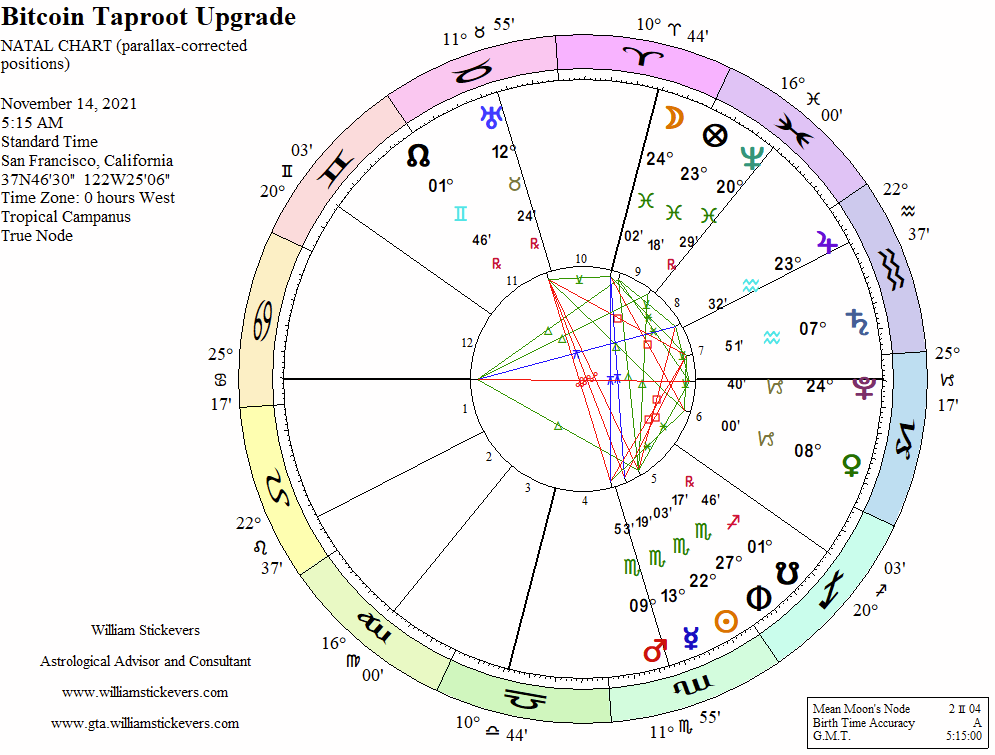
Multiple dashboards and predictions including Clark Moody Bitcoin, Taproot Watch, and Nice Hash, reveal the date of activation to be on November 14th.
Responses