
China’s Crackdown On Bitcoin Accelerates and Intensifies


Bitcoin fell around 9% early on Monday morning after Chinese officials targeted bitcoin mines in the key province of Sichuan, part of a wider crackdown on the process through which computers solving complex problems consume huge amounts of electricity.
China is also keen to prevent cryptocurrencies from “infringing” upon the global financial order, prompting a ban on financial services facilitating crypto trade.
China is the source of the majority of the world’s cryptocurrency trade—a 2020 study found it to account for nearly 80% of global Bitcoin operations—and Sichuan is its second-most intensive mining region.
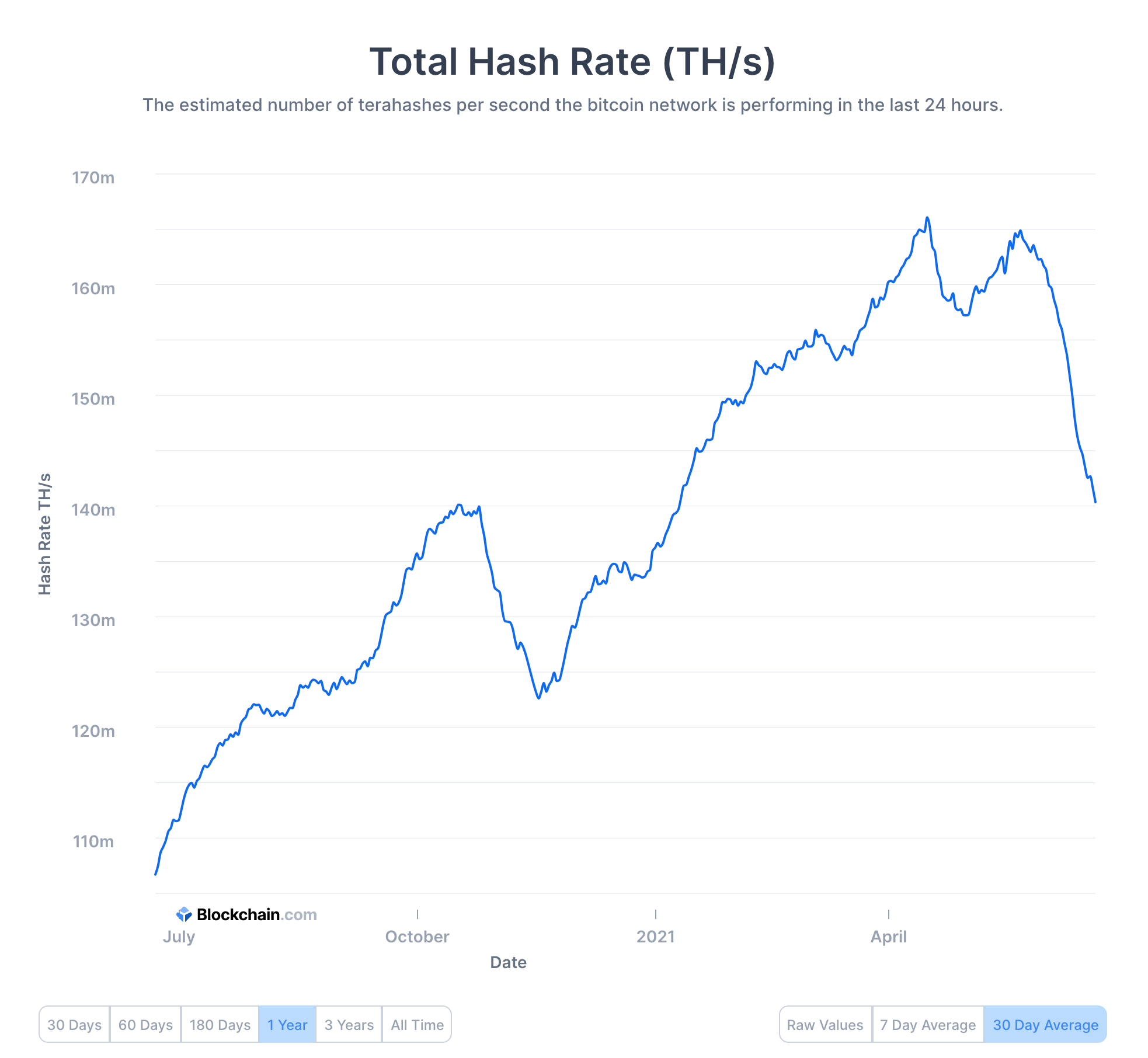
The move seems to have precipitated a sharp decline in bitcoin’s hashrate, the computational power used to mine and process bitcoin transactions.
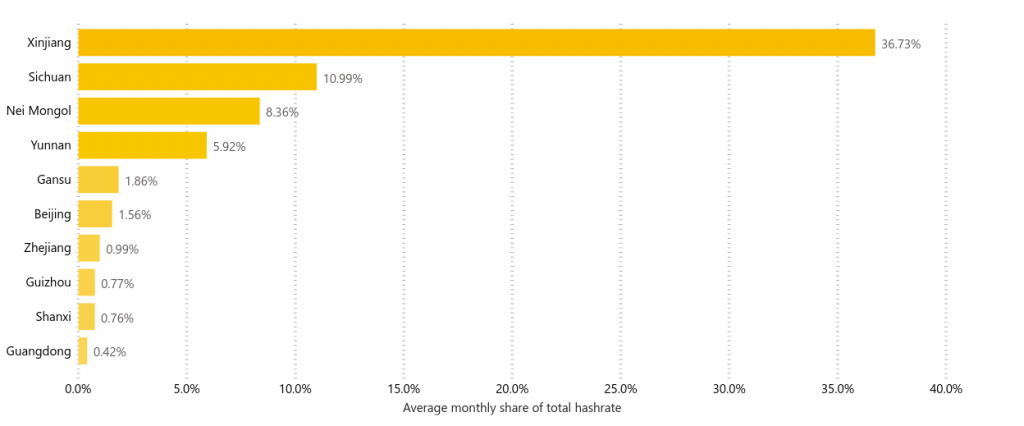
Chinese authorities in Xinjiang ordered several crypto mining farms to shut down on June 9, but miners were still left with the super popular Sichuan province, especially as many of them migrate to the area during the rainy season anyway.
Now, the Sichuan region is ‘hit’ as well. And this immediately got reflected in Bitcoin’s average hashrate, which fell 19% between June 7 and June 20.
Local authorities claim the latest crackdown has cut the country’s Bitcoin production by more than 90%, according to state media the Global Times.
The fall caused Bitcoin to drop to its lowest value in nearly two weeks, falling below $33,000 a token for the first time in 12 days.
The drop in the Bitcoin hash rate will be quickly corrected by the mining difficulty adjustment that occurs approximately every two weeks making mining Bitcoin easier for those miners still on the network (this makes the remaining miners more profitable until the miners who left are able to return to their mining activities).
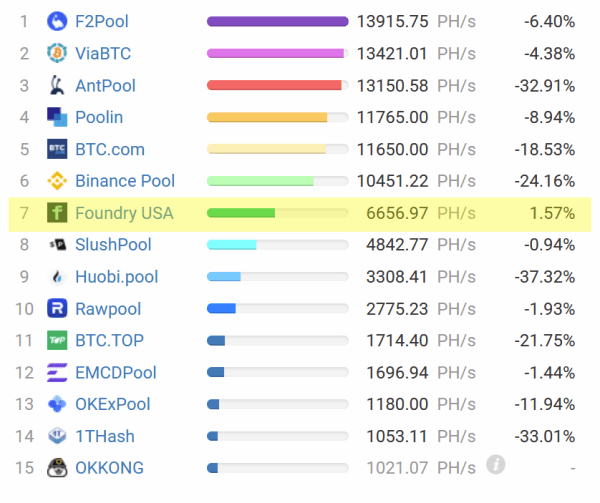
While China is losing market share in bitcoin mining, the United States is gaining market share. It won’t necessarily be one-for-one because some Chinese miners will not come to the US, but it is hard to argue any country is going to benefit more from this than the United States.
Other major cryptocurrencies, which often mirror bitcoin’s movements, also fell Monday morning, with Ether, Cardano, and Dogecoin all losing between 5-18%.
The cryptocurrency market has still not recovered from when China announced its intensifying regulatory crackdown on cryptocurrencies in mid-May an event that coincided with Elon Musk’s environmental concerns. The market’s total value, now around $1.4 trillion, is around 56% of what it was just over a month ago.
In the short term, the events in China are naturally causing a negative market reaction, but in the long term, it will likely be a net positive for Bitcoin and cryptocurrencies. As miners spread to other locations throughout the globe, they will likely choose places with secure access to cheap energy sources. As a result, the Bitcoin hashrate will start recovering, and the network will become even more stable. Additionally, mining will become more decentralized and based on clean, renewable energy sources.
Responses